
Site type
Abandoned Mine Lands
Mine spoil and tailings are often acidic, metal-laden and nearly lifeless. The accepted fix is to neutralize, cover and revegetate, and that last step depends on building living soil where there was none.
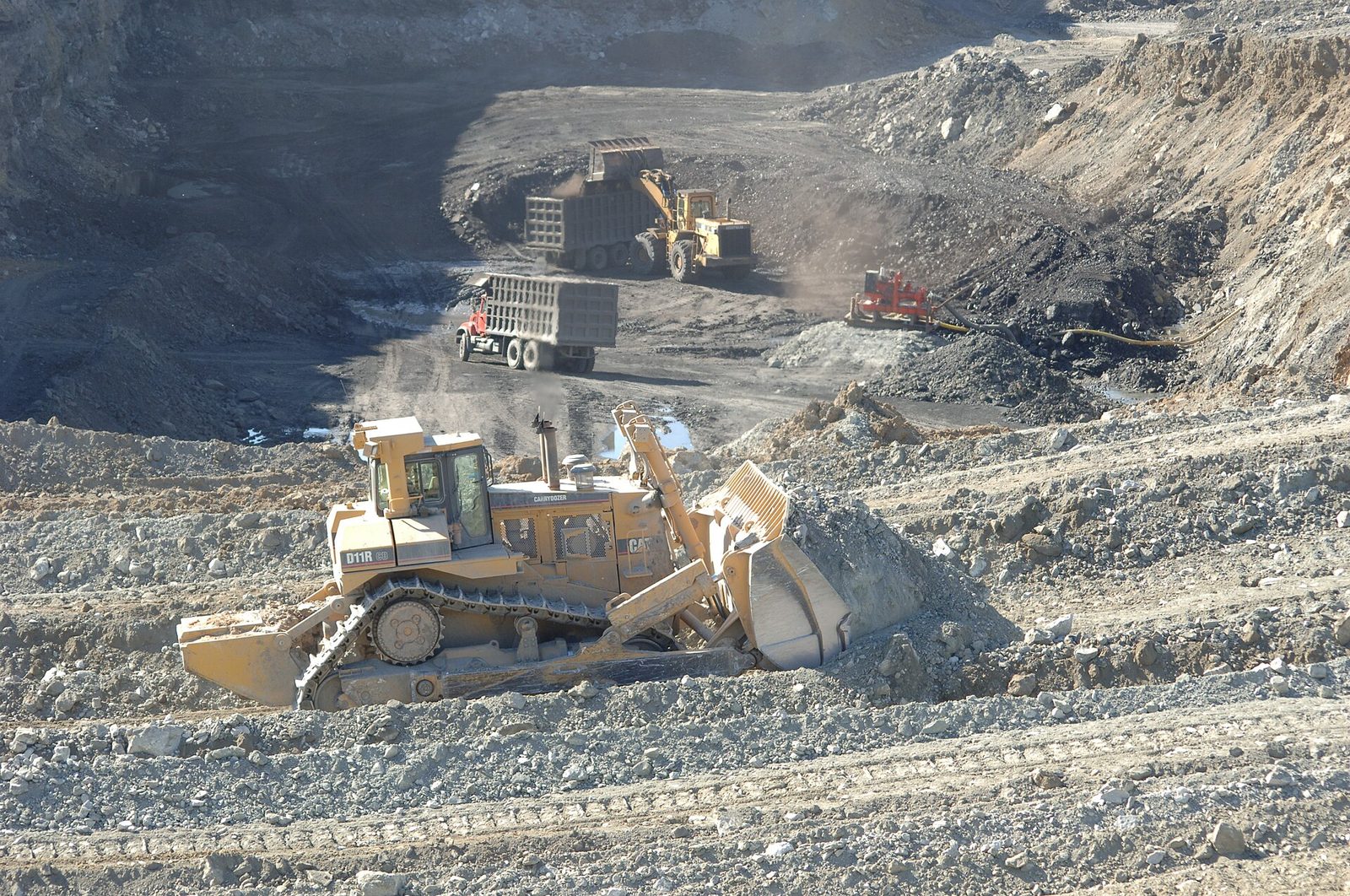
_Office_of_Surface_Mining,_Reclamation,_and_Enforcement_staff_(working_at_site_of_abandoned_coal_mine,_the_Horse_Creek_Mine,_near_Pinckneyville,_-_DPLA_-_b088c58b2f072628e2462dd71292875e.JPG)
On this page (7 sections)
Pennsylvania has the largest inventory of abandoned mines in the nation [1]. Acid mine drainage stains its streams orange across coal country, from the Allegheny Plateau to the anthracite fields.
What is usually in the soil
- Sulfide minerals in mine waste react with air and water to make sulfuric acid, and spoil and tailings can get acidic enough that almost nothing grows.
- Iron, aluminum and manganese dominate the metals in coal drainage, while hard-rock mine waste can add zinc, lead, cadmium, copper and arsenic.
- Spoil and tailings have little organic matter, few nutrients and almost no biology, so even with the chemistry fixed there is nothing to hold water or feed roots.
How these sites are usually handled
Mine reclamation combines earthwork, chemistry and plants: crews regrade dangerous highwalls and spoil piles, add lime to neutralize acidity, cover or cap the worst material and treat the drainage. Passive drainage treatment often relies on constructed wetlands and sulfate-reducing bioreactors, where bacteria do much of the work, and then the ground is revegetated.
Revegetation with organic amendments is accepted reclamation practice. In a 6-year field study of compost-assisted phytostabilization on extremely acidic pyritic tailings in Arizona, researchers tracked shifts in the soil microbial community and identified microbes that signal whether ground will keep supporting plants or slide back toward acid [2].
Where biology fits
Grasses, legumes and trees need living soil to take hold on reclaimed ground. Organic matter, microbes and fungi build the aggregates that hold water and resist erosion [3]. A plant cover that sustains itself is what keeps a reclaimed site from washing back into the stream, and this is where biology does most of its work on mine land.
No microbe breaks down a metal, though biology can change its chemical form, bind it, or help plants hold it in their roots so it stays put. Those effects can reverse if the soil turns acidic again, so they depend on stable pH and cover.
The sulfate-reducing bacteria behind passive drainage treatment reduce sulfate and help precipitate metals as sulfides, inside engineered, oxygen-free systems built for that purpose. A soil product spread on the surface is no substitute for a bioreactor.
Lime and grading come first, because organisms applied to unneutralized, highly acidic spoil won’t accomplish much.
Revegetation and soil building are measured in growing seasons, usually a year or more, with soil tests confirming pH, metals and cover.
Microbes in our products with research on metals and plant support
Independent DNA sequencing by Biome Makers identified 291 microbial species in Elm Dirt’s Plant Juice. Peer-reviewed research shows a few can bind metals or support plants on contaminated ground:
- Desulfovibrio vulgaris, a sulfate-reducing bacterium, reduces chromium(VI) and uranium(VI) to less mobile forms without oxygen [4][9].
- Cupriavidus metallidurans carries gene systems for cadmium, zinc, copper, lead, nickel and other metals and has been used in engineered systems to precipitate them [5].
- Variovorax paradoxus makes an enzyme that dampens stress signaling in plants. In cadmium-contaminated soil, a consortium including it more than doubled plant biomass [6]. On mine land, getting plants established is most of the job.
What they do on your ground gets tested there, with an independent lab. More in the microbe library.
Funding
The 2021 Bipartisan Infrastructure Law put about $11.3 billion into the Abandoned Mine Reclamation Fund over 15 years, administered by the federal Office of Surface Mining Reclamation and Enforcement [7]. Pennsylvania receives $244.9 million a year for 15 years, about $3.7 billion in total, to reclaim eligible pre-1977 abandoned mine land and treat abandoned mine drainage [8]. The Pennsylvania Department of Environmental Protection also runs a grant program for abandoned mine land and drainage projects [1]. Nearly every reclamation project that money pays for includes revegetation.
Talk with us
Reclamation contractors, watershed groups and county programs working on mine land: we can help with soil building for revegetation. Get in touch.
Sources
- Pennsylvania Department of Environmental Protection. “Shapiro Administration Awards $19.6 Million to Address Largest Inventory of Abandoned Mines in the Nation.” News release, December 17, 2024. pa.gov
- Hottenstein JD, Neilson JW, Gil-Loaiza J, et al. (2019). Soil microbiome dynamics during pyritic mine tailing phytostabilization: understanding microbial bioindicators of soil acidification. Frontiers in Microbiology 10:1211. doi:10.3389/fmicb.2019.01211
- Rillig MC, Mummey DL (2006). Mycorrhizas and soil structure. New Phytologist 171(1):41–53. doi:10.1111/j.1469-8137.2006.01750.x
- Lovley DR, Phillips EJ (1994). Reduction of chromate by Desulfovibrio vulgaris and its c3 cytochrome. Applied and Environmental Microbiology 60(2):726–728. doi:10.1128/aem.60.2.726-728.1994
- Diels L, Van Roy S, Taghavi S, Van Houdt R (2009). From industrial sites to environmental applications with Cupriavidus metallidurans. Antonie van Leeuwenhoek 96(2):247–258. doi:10.1007/s10482-009-9361-4
- Belimov AA, Shaposhnikov AI, Azarova TS, et al. (2020). Microbial consortium of PGPR, rhizobia and arbuscular mycorrhizal fungus makes pea mutant SGECd(t) comparable with Indian mustard in cadmium tolerance and accumulation. Plants 9(8):975. doi:10.3390/plants9080975
- Office of Surface Mining Reclamation and Enforcement. Bipartisan Infrastructure Law: Abandoned Mine Land program. osmre.gov
- Pennsylvania Department of Environmental Protection. IIJA/BIL Abandoned Mine Land Program. pa.gov
- Lovley DR, Widman PK, Woodward JC, Phillips EJ (1993). Reduction of uranium by cytochrome c3 of Desulfovibrio vulgaris. Applied and Environmental Microbiology 59(11):3572–3576. doi:10.1128/aem.59.11.3572-3576.1993
Managing a site like this?
Tell us where it is and what's been tested, and we'll tell you where biology fits in the plan, if it fits at all.