
Site type
Fuel and Oil Spills
Petroleum is the contaminant biology handles best. Diesel, gasoline, crude and lubricating oils are food for a wide range of soil microbes, and treating them in soil is an established, regulator-accepted practice.
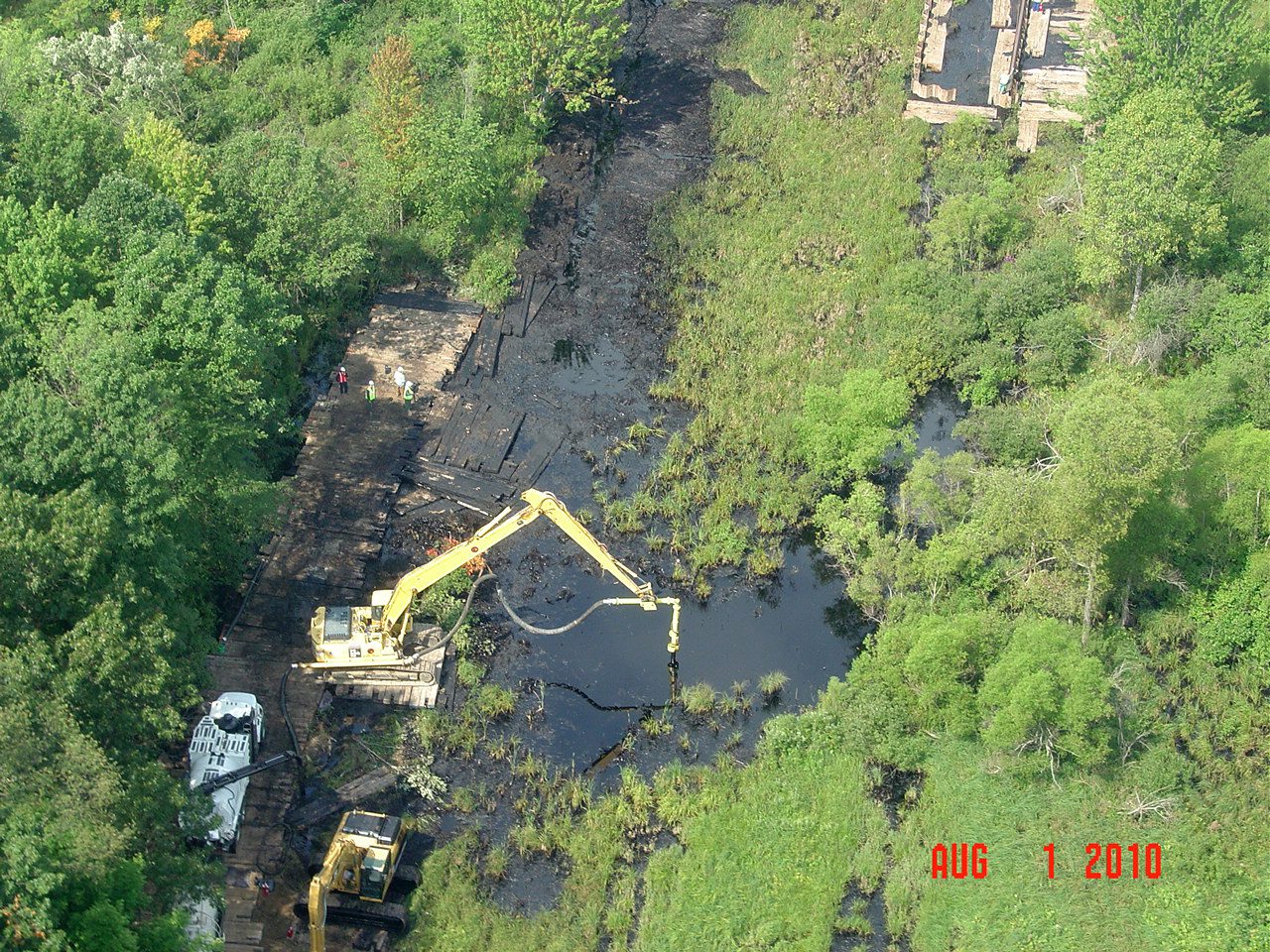
.jpg)
On this page (6 sections)
A leaking tank, a ruptured line, a tipped tanker, a farm fuel stand: fuel is the most common soil contaminant there is. It is also the one soil biology handles best.
What is usually in the soil
- Total petroleum hydrocarbons (TPH), the broad mix of chain-shaped and ring-shaped molecules that make up fuels and oils
- BTEX, meaning benzene, toluene, ethylbenzene and xylenes, the lighter and more mobile fraction of gasoline
- PAHs, the heavier ring compounds in diesel, crude, heating oil and weathered residues
- Brine at oil and gas sites, where salty produced water often comes up with the oil and complicates recovery
How these sites are usually handled
Small, fresh spills are often dug out and hauled to a landfill. Larger volumes are commonly treated on site in landfarms or biopiles: the soil is spread or piled, aerated, given nutrients and moisture, and monitored while microbes break the hydrocarbons down. Lighter products can be treated in place by delivering oxygen and nutrients to the native microbes.
EPA’s guide to bioremediation lists oil and other petroleum products first among the contaminants it treats, notes that soil can be treated on site without hauling it away, and says the work runs a few months to several years depending on conditions [1].
EPA’s National Contingency Plan Product Schedule includes bioremediation agents for oil discharges. EPA says listing does not mean it approves, recommends, licenses or certifies a product, and that use on a spill needs authorization from the federal on-scene coordinator [2]. On land, the decision usually rests with the state program overseeing the cleanup.
Where biology fits
Most soils already hold hydrocarbon degraders, which biostimulation feeds and aerates, while bioaugmentation adds more of the right organisms. In a 365-day field study of diesel-contaminated soil, adding a bacterial consortium gave the highest cleanup efficiency, and adding a biosurfactant made no noticeable difference [3]. That second result is a handy check on product claims in this market.
Excavated or landfarmed ground needs organic matter and biology before cover will grow again, and on farmland that is what gets the field back into production.
Biological treatment of fuel has limits worth planning around.
- Brine-impacted soil needs its own treatment plan, and salty soil is harder going for microbes.
- Old, weathered oil binds tightly and breaks down more slowly than a fresh spill.
- Most petroleum degradation needs oxygen and moisture, so compacted, waterlogged or bone-dry soil stalls it.
- Treatment takes months and sometimes more than a year, with lab testing against the cleanup target along the way.
Microbes in our products with petroleum research
Independent DNA sequencing by Biome Makers identified 291 microbial species in Elm Dirt’s Plant Juice. Peer-reviewed research on petroleum covers several of them:
- Pseudomonas putida degrades diesel-range alkanes, including as part of the consortium in the 365-day field study above [3]. Strains carry the alkane hydroxylase enzymes that start breaking down straight-chain hydrocarbons [4].
- Pseudomonas fluorescens was also in that field consortium [3], and an engineered naphthalene-degrading strain was monitored in soil for two years in a contained U.S. field release [5].
- Acinetobacter calcoaceticus: one strain degraded 82 to 92 percent of C12 to C18 alkanes in 28 days [6].
These are species capabilities from the literature. We have not yet published product-level test results for our blends. More in the microbe library.
Talk with us
Applicators, consultants, landowners and operators with petroleum-impacted soil: we can help plan a biological treatment and a sampling schedule your regulator will recognize. Start here.
Sources
- U.S. EPA (2012). A Citizen’s Guide to Bioremediation (EPA 542-F-12-003). semspub.epa.gov
- U.S. EPA. National Contingency Plan Subpart J. epa.gov
- Szulc A, Ambrożewicz D, Sydow M, et al. (2014). The influence of bioaugmentation and biosurfactant addition on bioremediation efficiency of diesel-oil contaminated soil: feasibility during field studies. Journal of Environmental Management 132:121–128. doi:10.1016/j.jenvman.2013.11.006
- van Beilen JB, Neuenschwander M, Smits TH, et al. (2002). Rubredoxins involved in alkane oxidation. Journal of Bacteriology 184(6):1722–1732. doi:10.1128/JB.184.6.1722-1732.2002
- Ripp S, Nivens DE, Werner C, Sayler GS (2000). Bioluminescent most-probable-number monitoring of a genetically engineered bacterium during a long-term contained field release. Applied Microbiology and Biotechnology 53(6):736–741. doi:10.1007/s002530000343
- Ho MT, Li MSM, McDowell T, et al. (2020). Characterization and genomic analysis of a diesel-degrading bacterium, Acinetobacter calcoaceticus CA16, isolated from Canadian soil. BMC Biotechnology 20(1):39. doi:10.1186/s12896-020-00632-z
Managing a site like this?
Tell us where it is and what's been tested, and we'll tell you where biology fits in the plan, if it fits at all.