
Site type
Brownfields
Former industrial and commercial land with mixed legacy contamination. Biology has an accepted role for petroleum and some solvents, and a large one in rebuilding soil once a site is headed for green space.

On this page (7 sections)
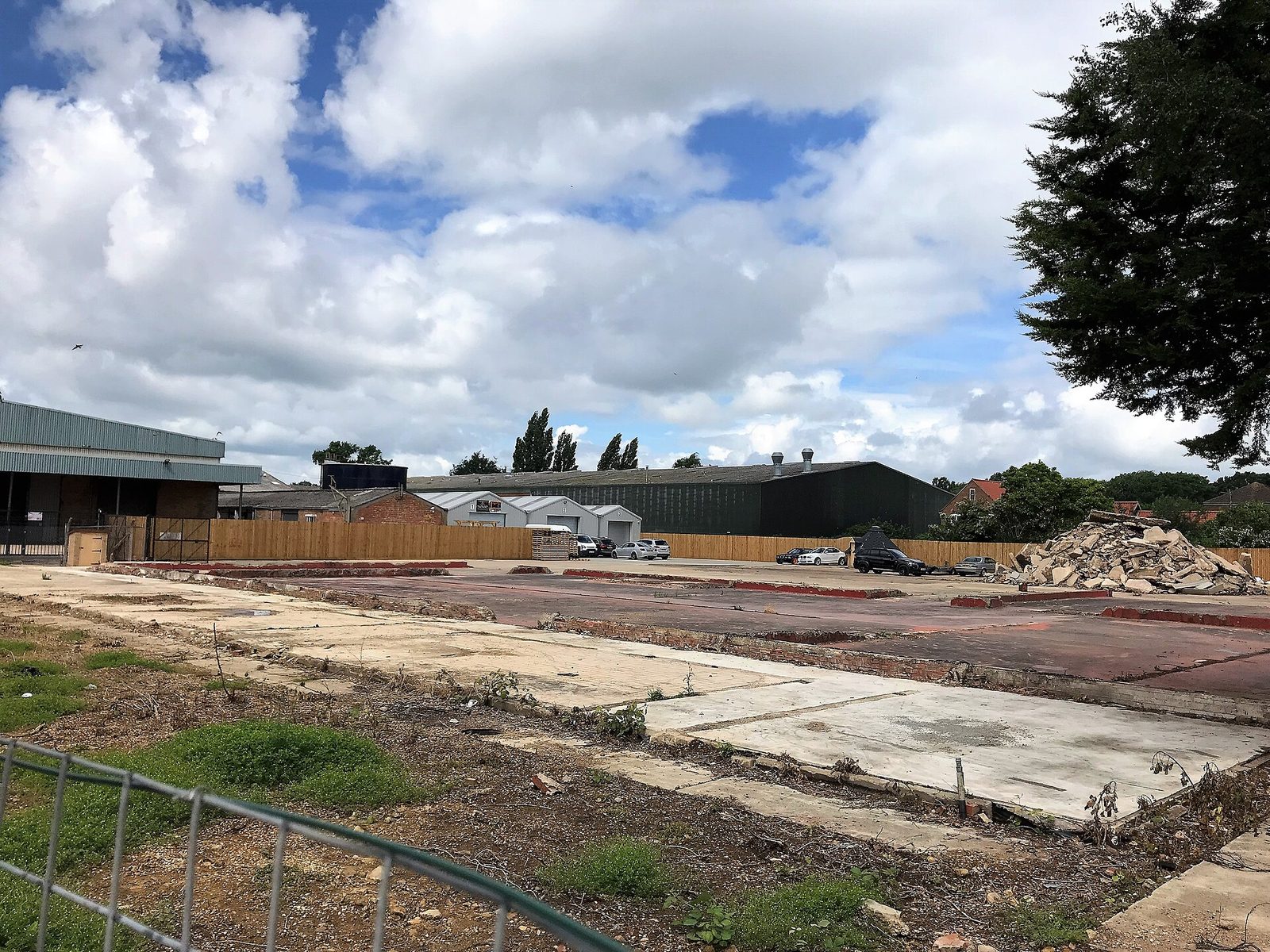
A brownfield is property whose reuse is held up by real or suspected contamination: the old gas station, the shuttered plant, the rail yard at the edge of town. Most are harmless to walk past, yet they are hard to sell, finance and build on until someone knows what is in the ground.
What is usually in the soil
Whatever happened there, often several uses stacked on top of each other:
- Petroleum hydrocarbons from tanks, fueling and equipment
- PAHs from coal, ash, asphalt and fill
- Chlorinated solvents from degreasing, dry cleaning and manufacturing
- Heavy metals such as lead, arsenic and chromium
How these sites are usually handled
Assessment comes first: a Phase I review of the site’s history, then Phase II sampling. Cleanup after that is risk-based and tied to the planned reuse, so a future parking lot and a future playground face different standards. The usual tools are hot-spot excavation, capping, institutional controls such as deed restrictions, and in-place treatment where it fits.
Federal law leans toward treatment, since the Superfund statute directs EPA to prefer remedies in which treatment permanently and significantly reduces the volume, toxicity or mobility of contaminants over remedies that only move or contain them [1]. Bioremediation is an established treatment option for petroleum products, solvents and pesticides [2].
In Pennsylvania, the voluntary cleanup path is the Land Recycling Program, known as Act 2. It offers uniform cleanup standards, liability relief once a site meets them, standardized reviews with time limits, and financial assistance [3].
Where biology fits
Biological treatment has its best track record on petroleum and PAH hot spots, and treating these in place or in on-site biopiles can cut the volume of soil trucked away. EPA’s guide notes that bioremediation treats soil on site, can use less equipment and energy than other methods, and takes a few months to several years depending on conditions [2].
Some chlorinated solvents biodegrade, although the anaerobic bacteria doing most of that work are specialists. A solvent plume usually needs an engineered design, and we support the soil around it.
Biology can bind metals or change their form, and organic matter can reduce how much plants take up, but nothing destroys them, so they are usually removed, capped or stabilized.
Many brownfields become parks, trails, community gardens or landscaped buffers on fill or capped ground with no living soil. Rebuilding biology and organic matter is how that ground grows grass and trees that last, and it is where we help most on these sites.
Biological work takes months to a year or more, confirmed by lab testing against the site’s cleanup standards.
Microbes in our products with research on brownfield contaminants
Independent DNA sequencing by Biome Makers identified 291 microbial species in Elm Dirt’s Plant Juice. Peer-reviewed research shows several can act on brownfield contaminants:
- Pseudomonas putida degrades diesel-range alkanes, including as part of a consortium in a 365-day field study [4].
- Acinetobacter calcoaceticus: one strain degraded 82 to 92 percent of C12 to C18 alkanes in 28 days [5].
- Comamonas testosteroni degrades PAHs in soil [6].
- Cupriavidus metallidurans binds and precipitates cadmium, zinc, copper and lead in engineered treatment systems [7].
What they do on your ground gets tested there, with an independent lab. More in the microbe library.
Funding
In June 2026, EPA selected 193 Brownfields Multipurpose, Assessment and Cleanup grants totaling more than $248 million for 190 communities, plus $22.5 million in supplemental Revolving Loan Fund awards [8]. EPA says the grants support states, Tribal Nations, local governments and communities. A municipality with a site headed for green space can write soil restoration into its cleanup and reuse plan.
Talk with us
If you own a brownfield or are drafting a reuse plan, we can go through where biology fits on it and where it doesn’t. Contact us.
Sources
- Congressional Research Service. Comprehensive Environmental Response, Compensation, and Liability Act: A Summary of Superfund Cleanup Authorities and Related Provisions of the Act (R41039). congress.gov
- U.S. EPA (2012). A Citizen’s Guide to Bioremediation (EPA 542-F-12-003). semspub.epa.gov
- Pennsylvania Department of Environmental Protection. Land Recycling Program. pa.gov
- Szulc A, Ambrożewicz D, Sydow M, et al. (2014). The influence of bioaugmentation and biosurfactant addition on bioremediation efficiency of diesel-oil contaminated soil: feasibility during field studies. Journal of Environmental Management 132:121–128. doi:10.1016/j.jenvman.2013.11.006
- Ho MT, Li MSM, McDowell T, et al. (2020). Characterization and genomic analysis of a diesel-degrading bacterium, Acinetobacter calcoaceticus CA16, isolated from Canadian soil. BMC Biotechnology 20(1):39. doi:10.1186/s12896-020-00632-z
- Lu Q, Sun X, Jiang Z, et al. (2022). Effects of Comamonas testosteroni on dissipation of polycyclic aromatic hydrocarbons and the response of endogenous bacteria for soil bioremediation. Environmental Science and Pollution Research 29:82351–82364. doi:10.1007/s11356-022-21497-z
- Diels L, Van Roy S, Taghavi S, Van Houdt R (2009). From industrial sites to environmental applications with Cupriavidus metallidurans. Antonie van Leeuwenhoek 96(2):247–258. doi:10.1007/s10482-009-9361-4
- U.S. EPA. Applications Selected for FY 2026 Brownfields Multipurpose, Assessment, Cleanup Grants, and RLF Supplemental Funding. epa.gov
Managing a site like this?
Tell us where it is and what's been tested, and we'll tell you where biology fits in the plan, if it fits at all.