
Site type
Agricultural Land
Farm soils carry pesticide and herbicide residues, and sometimes spills of fuel or brine. Living soil is where most of those residues break down, and research shows the biology can adapt to do it faster.
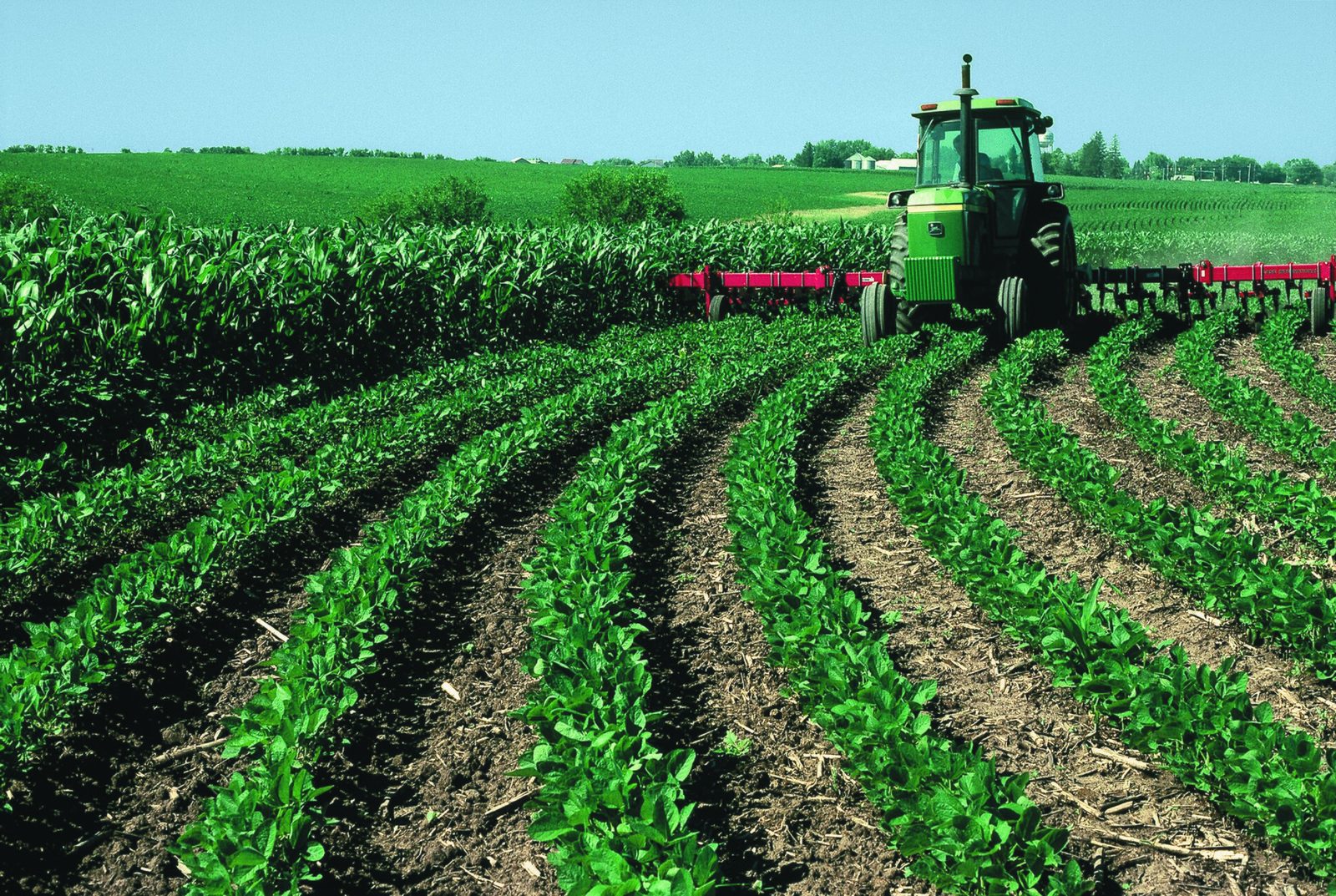
(NRCS_Photo_Gallery).jpg)
On this page (7 sections)
Soil microbes break down many of the pesticides sprayed on a field, eating them outright or attacking them alongside other food [6]. Trouble starts when a residue lasts longer than expected, carries over into next year’s crop, or arrives all at once in a spill.
What is usually in the soil
- Pesticide and herbicide residues from most modern products break down within a season, though some herbicides last long enough to injure a sensitive crop the following year.
- Organophosphate insecticides start breaking down through hydrolysis, and some of the breakdown products are themselves toxic and persistent [6].
- Fuel reaches farm soil from fuel stands, equipment leaks and pipeline releases, covered in more detail under fuel and oil spills.
- Flood deposits can leave sediment carrying salts, metals and other residues when high water recedes, as described under flood sediment.
How it is usually handled
On working farms, carryover and residue problems get agronomic answers: time, tillage, rotation, tolerant crops, and a soil test before planting anything sensitive. Spills follow state cleanup rules for the material involved. Regulated cleanups of pesticide sites, such as old mixing and loading areas, go site by site under state oversight.
Where biology fits
A field’s own microbes can learn to handle a residue. USDA Agricultural Research Service scientists in Mississippi found atrazine breaking down about twice as fast in fields with a history of atrazine use as in soil without one, with field half-lives of roughly 9 to 10 days against 17. Rapid microbial attack on the herbicide’s ring structure drove the difference [1]. The biology had adapted to what it was being fed.
Feeding that biology matters, since organic matter, roots and a diverse microbial community give a residue more chances to meet an organism that can break it down, which is the practical reason to rebuild biology on a field with a residue problem.
Some soil bacteria carry specialist enzymes aimed at particular pesticide families. The best studied is organophosphate hydrolase, which cuts the bond at the center of organophosphate insecticides [2].
Breakdown varies field by field with the chemical, soil type, moisture, temperature and organic matter, and it plays out over a season or more, so we test before and after with an independent lab.
Microbes in our products with research on farm chemicals
Independent DNA sequencing by Biome Makers identified 291 microbial species in Elm Dirt’s Plant Juice. Peer-reviewed research shows several can act on agricultural chemicals:
- Brevundimonas diminuta produces organophosphate hydrolase and can grow using an organophosphate insecticide as its phosphate source [2].
- Pseudomonas putida degrades the insecticide chlorpyrifos [3].
- Cupriavidus necator is the model organism for breaking down the herbicide 2,4-D, studied down to the carbon it pulls from the herbicide [4][5].
What they do in your field gets tested there, with an independent lab. More in the microbe library.
Who to involve
State agriculture departments, land-grant extension services and soil testing labs are the right partners on residue questions. For a spill, the state environmental agency sets the cleanup target.
Talk with us
If you farm, manage farmland or advise growers on a residue or spill problem, we can help plan the recovery and the testing that confirms it. Reach us here.
Sources
- Krutz LJ, Zablotowicz RM, Reddy KN, et al. (2007). Enhanced degradation of atrazine under field conditions correlates with a loss of weed control in the glasshouse. Pest Management Science 63(1):23–31. doi:10.1002/ps.1304
- Parthasarathy S, Parapatla H, Nandavaram A, et al. (2016). Organophosphate hydrolase is a lipoprotein and interacts with Pi-specific transport system to facilitate growth of Brevundimonas diminuta using OP insecticide as source of phosphate. Journal of Biological Chemistry 291(14):7774–7785. doi:10.1074/jbc.M116.715110
- Pradeep V, Subbaiah UM (2015). Repeated batch and continuous degradation of chlorpyrifos by Pseudomonas putida. Journal of Environmental Science and Health, Part B 50(4):346–360. doi:10.1080/03601234.2015.1000180
- Lerch TZ, Dignac MF, Barriuso E, et al. (2007). Tracing 2,4-D metabolism in Cupriavidus necator JMP134 with 13C-labelling technique and fatty acid profiling. Journal of Microbiological Methods 71(2):162–174. doi:10.1016/j.mimet.2007.08.003
- Kumar A, Trefault N, Olaniran AO (2016). Microbial degradation of 2,4-dichlorophenoxyacetic acid: insight into the enzymes and catabolic genes involved, their regulation and biotechnological implications. Critical Reviews in Microbiology 42(2):194–208. doi:10.3109/1040841X.2014.917068
- Armenova N, Tsigoriyna L, Arsov A, et al. (2023). Microbial detoxification of residual pesticides in fermented foods: current status and prospects. Foods 12(6):1163. doi:10.3390/foods12061163
Managing a site like this?
Tell us where it is and what's been tested, and we'll tell you where biology fits in the plan, if it fits at all.