
Site type
Flood Sediment
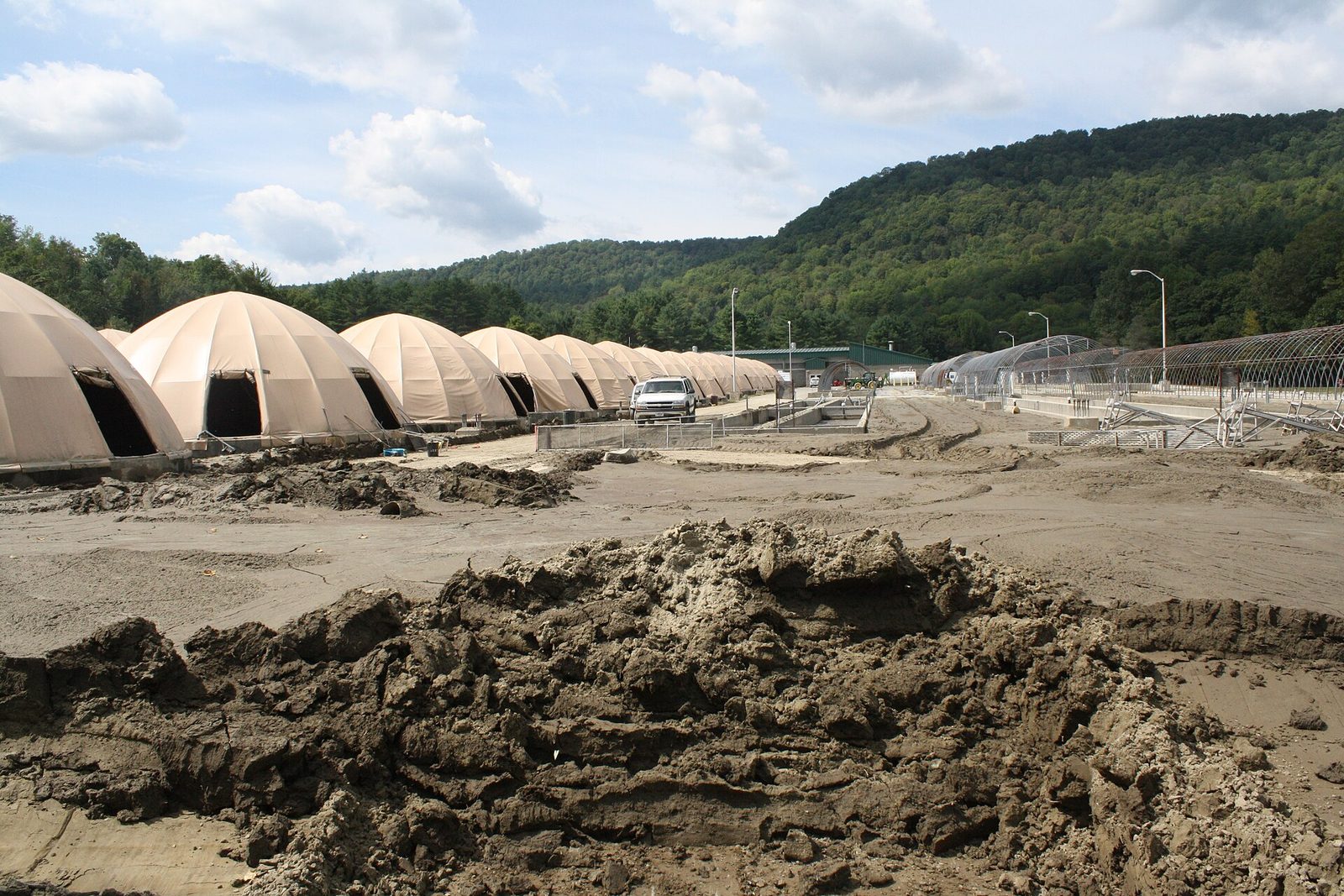
Floodwater leaves behind sediment that can carry salt, metals, fuel, pesticides and sewage. The first steps are testing, waiting and removing what is clearly contaminated. Rebuilding the soil's biology is what gets the ground growing again.
.jpg)
On this page (7 sections)
When a river or storm surge drops, it leaves behind whatever it picked up. Families and farmers in Pennsylvania river towns, on bottomland, and across the Southeast after recent hurricanes all end up asking what is in the mud and when the ground can be used again.
What is usually in the sediment
Floodwater picks up contamination from everything it touches, and NC State Extension lists salt, lead, heavy metals and pesticides as the chemical contaminants of concern for garden soil, plus bacteria, viruses and parasites from raw sewage, manure and dead animals [1]. Fuel and oil from vehicles, tanks and flooded buildings are common too.
Flood deposits change the soil physically as well. A fresh layer of silt can seal the surface, and saturated soil runs out of oxygen.
How it is usually handled
The usual answer is to test, wait and remove. For vegetable gardens, NC State Extension recommends [1]:
- waiting at least 60 days after floodwaters recede before replanting edible crops, and at least 100 days for root crops
- waiting at least 120 days before harvesting any edible produce
- testing soil for suspected chemical contaminants, since biological contamination can’t be reliably tested
- working in organic matter to dilute contaminants and bind heavy metals, which lowers the chance plants absorb them
- never composting flood debris
On larger sites, clearly contaminated sediment is removed, and clean sediment can be stockpiled and reused under state guidance. Fuel sheens and petroleum deposits are handled as a fuel spill.
Where biology fits
Even after testing and the waiting period, flooded ground still has to work as soil again, and organic matter and living biology rebuild its structure, reopen it to water and get roots going. After a flood, this is where a soil-biology partner helps most.
Fuel is the flood contaminant biology handles best, and peer-reviewed research shows several organisms in our products can degrade petroleum hydrocarbons.
Biology has clear limits on flooded ground, since salt needs flushing and sometimes gypsum, and metals can be bound by organic matter but never destroyed. Our products don’t sanitize anything; the waiting periods above manage pathogen risk from sewage.
Plan on a season or more, and test before planting food crops.
Microbes in our products with petroleum research
Independent DNA sequencing by Biome Makers identified 291 microbial species in Elm Dirt’s Plant Juice. For petroleum residue in flood deposits, the most relevant are:
- Pseudomonas putida, which degrades diesel-range alkanes, including as part of a consortium in a 365-day field study [2].
- Acinetobacter calcoaceticus: one strain degraded 82 to 92 percent of C12 to C18 alkanes in 28 days [3].
What they do on your ground gets tested there, with an independent lab. More in the microbe library.
Who to involve
Extension services, state environmental and agriculture departments, and county emergency management lead flood recovery. Land-grant university soil labs are a good first call for gardens and small farms.
Talk with us
If you are helping a community, farm or park recover flooded ground, we can help rebuild the soil once testing clears it. Send us a note.
Sources
- NC State Extension (2020, revised 2026). Managing the Impact of Floodwater Contaminants on Soil and Produce in Residential, Community, and School Vegetable Gardens. content.ces.ncsu.edu
- Szulc A, Ambrożewicz D, Sydow M, et al. (2014). The influence of bioaugmentation and biosurfactant addition on bioremediation efficiency of diesel-oil contaminated soil: feasibility during field studies. Journal of Environmental Management 132:121–128. doi:10.1016/j.jenvman.2013.11.006
- Ho MT, Li MSM, McDowell T, et al. (2020). Characterization and genomic analysis of a diesel-degrading bacterium, Acinetobacter calcoaceticus CA16, isolated from Canadian soil. BMC Biotechnology 20(1):39. doi:10.1186/s12896-020-00632-z
Managing a site like this?
Tell us where it is and what's been tested, and we'll tell you where biology fits in the plan, if it fits at all.