
Bacterium · The broadest degrader we carry
Pseudomonas putida
The deepest research record of any organism in this library: diesel in field soil, the benzene family, vinyl chloride, solvents, glycol ethers, plasticizer residues and pesticides.

| Contaminant | What the research documents |
|---|---|
| PAHs & SVOCs | Mineralization of PAHs and dioxin-like heterocycles (strain B6-2); degradation of diethyl phthalate and phthalic acid |
| Dioxins & furans | Cometabolic attack on dibenzofuran, the unchlorinated parent compound (strain B6-2) |
| Petroleum hydrocarbons | Alkane hydroxylase (AlkB) oxidation; member of a bioaugmentation consortium in a 365-day diesel field study; Degradation of a BTEX mixture, including benzene, by a refinery-soil isolate (strain AQ8) |
| Heavy metals | Mercury(II) reduction by a mercury-resistant strain (SP1) |
| Chlorinated solvents & VOCs | Growth on vinyl chloride as sole carbon and energy source (strain AJ); cometabolic oxidation of trichloroethylene by toluene dioxygenase (strain F1) |
| Pesticides & herbicides | Hydrolysis and breakdown of chlorpyrifos |
From published research on the species, not tests of an Elm Dirt product. Studies often work with one strain, and sequencing identifies species, so results on a site are measured on that site.
On this page (5 sections)
What it is
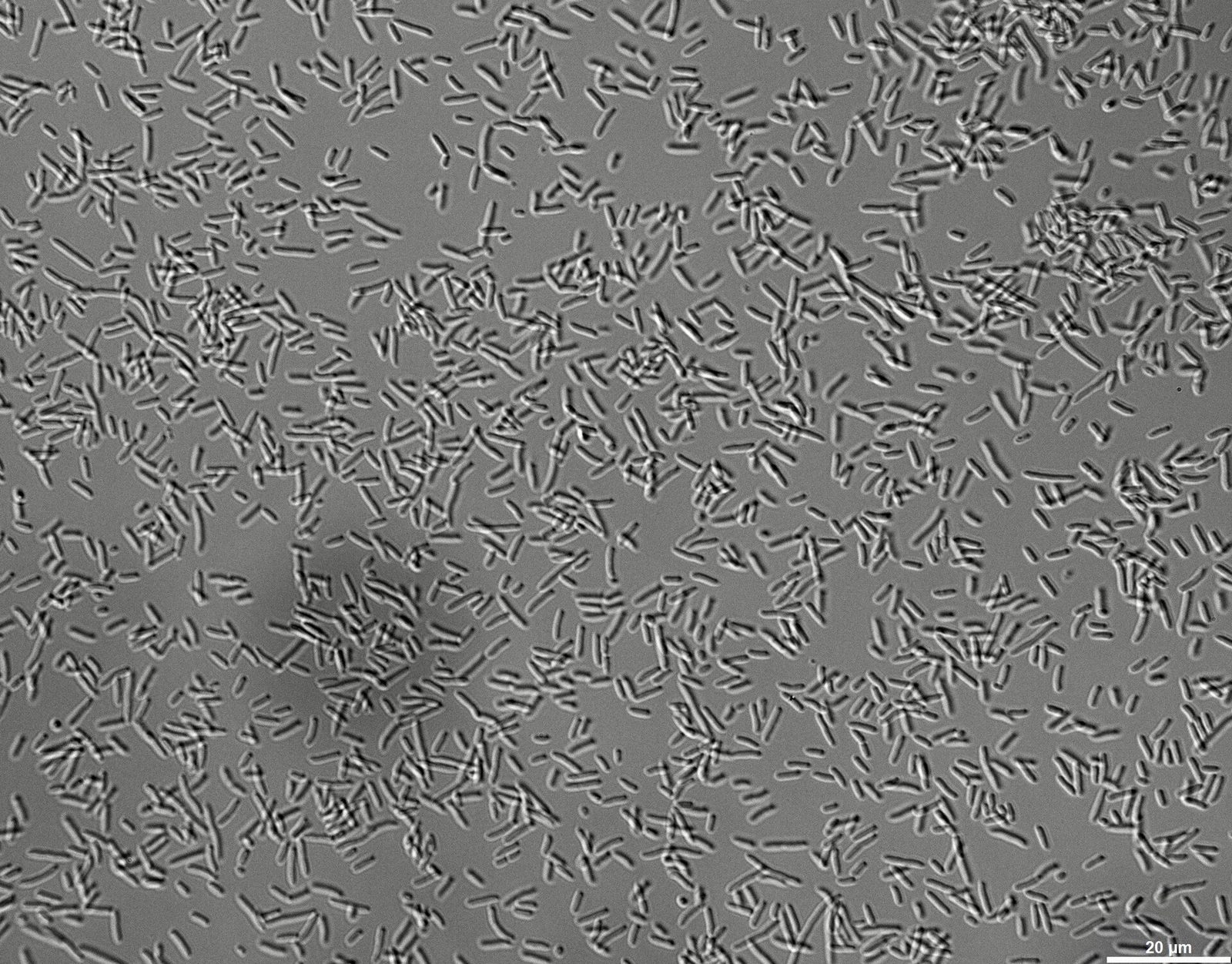
Pseudomonas putida is a rod-shaped soil bacterium found in gardens, farm fields and the root zone of most plants. It grows on a wide range of carbon sources, including many compounds other bacteria can’t use, and that flexibility has kept it in pollutant research since the 1970s.
Peer-reviewed research shows Pseudomonas putida can degrade petroleum hydrocarbons and break down trichloroethylene and the insecticide chlorpyrifos. It is one of the 291 microbial species identified in Plant Juice by independent lab analysis (Biome Makers), and it also appears in the Biome Makers lab profile of Bloom Juice.
What the research shows
In a 365-day field study on diesel-contaminated soil, a bacterial consortium that included P. putida gave the highest cleanup efficiency of the treatments tested, and adding a biosurfactant made no meaningful difference [1]. Because it ran in real soil, outdoors, for a full year, it is the strongest result on this page, though as a consortium result it reflects what a group of organisms did together.
Strain AJ was isolated from a hazardous waste site because it grows on vinyl chloride as its only source of carbon and energy, with oxygen, and on ethene and ethylene oxide too [7][8]. The genes sit on a large linear plasmid, a separate loop of DNA that a given strain either carries or lacks.
Against benzene and the rest of the BTEX family, strain AQ8, isolated from soil at a decommissioned oil refinery, depleted 40 percent of a BTEX mixture in 36 hours; its genome is sequenced and the oxidative pathway annotated [9]. Benzene usually sets the cleanup target on a fuel site, and this is the most-studied organism in our products against it.
Strain F1 breaks down trichloroethylene (TCE) with toluene dioxygenase, an enzyme it normally uses to eat toluene [3]. It can’t grow on TCE and needs a feeding substrate, a process called cometabolism.
For 2-butoxyethanol, a glycol ether solvent, eight of eleven bacterial strains isolated for completely degrading it were Pseudomonas [10]. The route runs through 2-butoxyacetic acid and cleaves the ether bond.
A P. putida isolate grows on diethyl phthalate and phthalic acid as carbon and energy sources [11], and phthalates show up on the same semivolatile lab panel as PAHs.
P. putida degraded the organophosphate insecticide chlorpyrifos in repeated-batch and continuous lab systems [4].
A mercury-resistant marine strain, SP1, reduced dissolved mercury(II) to elemental mercury in lab tests [5]. That work was done in water, and the metal changed form without being destroyed.
Strain B6-2 mineralizes polycyclic aromatic hydrocarbons and dioxin-like heterocycles, and its 6.37 Mb genome has been mapped for the gene clusters responsible [12]. Grown on biphenyl, the same strain breaks down dibenzofuran, the unchlorinated backbone of the furan family [6]. That work is on the parent compound, and the chlorinated congeners that drive toxicity at a burn site weren’t tested.
How it works
The key enzymes are oxygenases, which add oxygen to a stable hydrocarbon chain or aromatic ring so the cell can open it and use it. For straight-chain alkanes in fuel, that is alkane hydroxylase (AlkB), supported by small electron-carrier proteins called rubredoxins [2]. For aromatic rings, dioxygenases make the first cut.
Where it fits
No organism in this library covers more of the list: fuel, the BTEX aromatics, solvents, glycol ethers, plasticizer residues and pesticides. A generalist carrying specialist enzymes makes a good backbone organism on mixed sites. Whether it does any of this on a given site is measured there, over months to a year or more, by an independent lab.
Studies
- Szulc A, et al. (2014). The influence of bioaugmentation and biosurfactant addition on bioremediation efficiency of diesel-oil contaminated soil: feasibility during field studies. Journal of Environmental Management 132:121–128. doi:10.1016/j.jenvman.2013.11.006
- van Beilen JB, et al. (2002). Rubredoxins involved in alkane oxidation. Journal of Bacteriology 184(6):1722–1732. doi:10.1128/JB.184.6.1722-1732.2002
- Wackett LP, Gibson DT (1988). Degradation of trichloroethylene by toluene dioxygenase in whole-cell studies with Pseudomonas putida F1. Applied and Environmental Microbiology 54(7):1703–1708. doi:10.1128/aem.54.7.1703-1708.1988
- Pradeep V, Subbaiah UM (2015). Repeated batch and continuous degradation of chlorpyrifos by Pseudomonas putida. Journal of Environmental Science and Health, Part B 50(4):346–360. doi:10.1080/03601234.2015.1000180
- Zhang W, Chen L, Liu D (2012). Characterization of a marine-isolated mercury-resistant Pseudomonas putida strain SP1 and its potential application in marine mercury reduction. Applied Microbiology and Biotechnology 93(3):1305–1314. doi:10.1007/s00253-011-3454-5
- Li Q, et al. (2009). New metabolites in dibenzofuran cometabolic degradation by a biphenyl-cultivated Pseudomonas putida strain B6-2. Environmental Science & Technology 43(22):8635–8642. doi:10.1021/es901991d
- Danko AS, Luo M, Bagwell CE, Brigmon RL, Freedman DL (2004). Involvement of linear plasmids in aerobic biodegradation of vinyl chloride. Applied and Environmental Microbiology 70(10):6092–6097. doi:10.1128/AEM.70.10.6092-6097.2004
- Danko AS, Saski CA, Tomkins JP, Freedman DL (2006). Involvement of coenzyme M during aerobic biodegradation of vinyl chloride and ethene by Pseudomonas putida strain AJ and Ochrobactrum sp. strain TD. Applied and Environmental Microbiology 72(5):3756–3758. doi:10.1128/AEM.72.5.3756-3758.2006
- Chicca I, et al. (2020). Degradation of BTEX mixture by a new Pseudomonas putida strain: role of the quorum sensing in the modulation of the upper BTEX oxidative pathway. Environmental Science and Pollution Research 27(29):36203–36214. doi:10.1007/s11356-020-09650-y
- Woiski C, Dobslaw D, Engesser KH (2020). Isolation and characterization of 2-butoxyethanol degrading bacterial strains. Biodegradation 31(3):153–169. doi:10.1007/s10532-020-09900-3
- Shariati S, Pourbabaee AA, Alikhani HA (2023). Biodegradation of diethyl phthalate and phthalic acid by a new indigenous Pseudomonas putida. Folia Microbiologica 68(3):477–488. doi:10.1007/s12223-022-01022-y
- Wang W, et al. (2021). Genetic mapping of highly versatile and solvent-tolerant Pseudomonas putida B6-2 (ATCC BAA-2545) for mineralization of PAHs and dioxin-like compounds. Environmental Microbiology 23(8):4309–4325. doi:10.1111/1462-2920.15613
Want to know what's documented for your contaminants?
Tell us what's in the soil, and we'll point you to the organisms and studies that apply, and say where the research is thin.