
Field program
East Palestine, Ohio
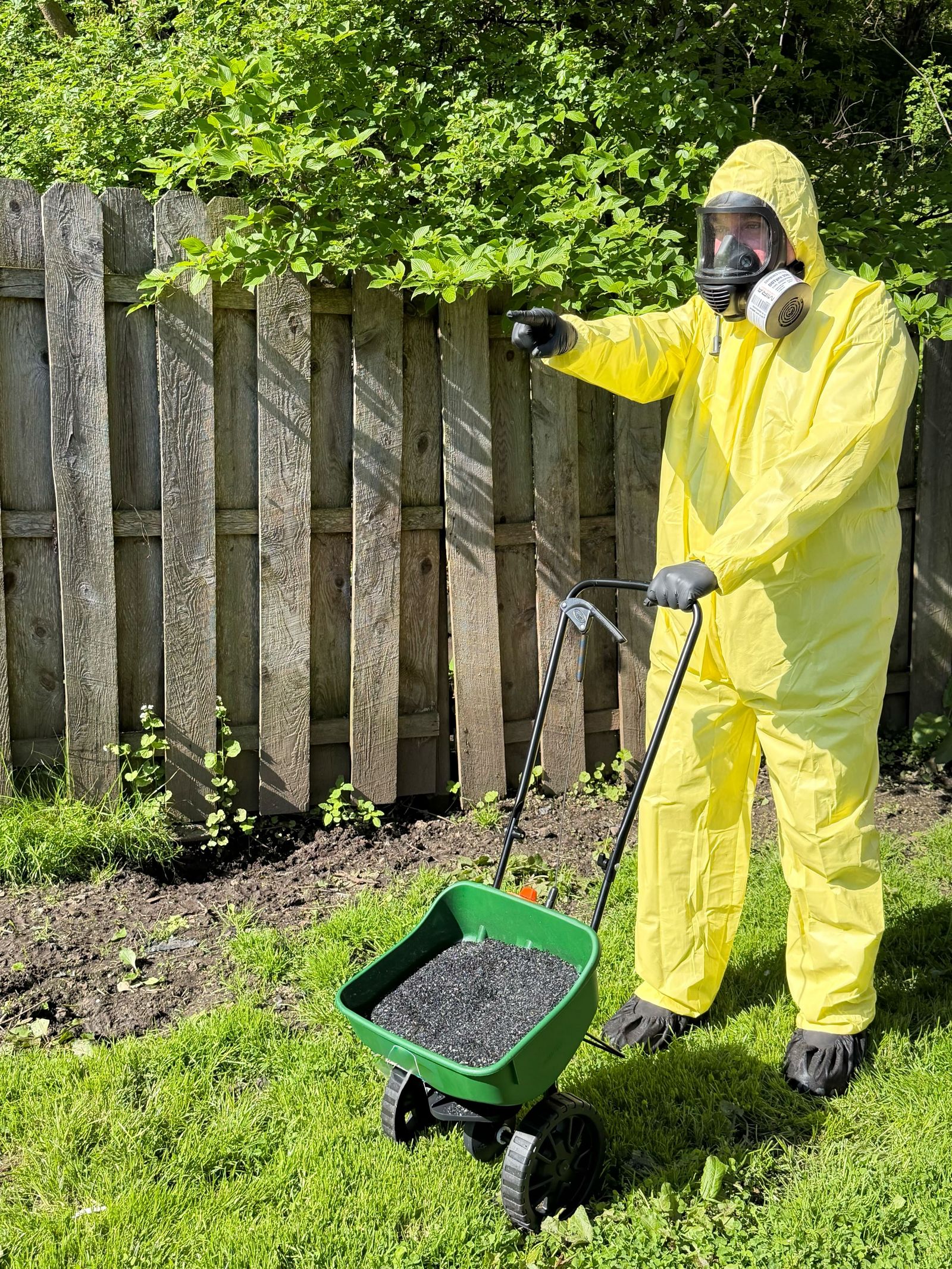
Elm Dirt has product in the ground in East Palestine as part of an ongoing soil-restoration pilot, with independent lab monitoring. We are working alongside community environmental advocates, and we measure before we say anything.
- Status
- Pilot in progress
- Monitoring
- Independent lab, before and after
- Results
- Published after follow-up testing
On this page (8 sections)
Elm Dirt has product in the ground in East Palestine as part of an ongoing soil-restoration pilot, with independent lab monitoring. This page covers what happened, which compounds the pilot is looking at, and how the work is set up.
We are a soil company, working alongside community environmental advocates on one question: can living soil biology help here, and can we show it with data? Our method is the same on every site. Put the right biology in the ground, measure it over time, and report what the lab finds.
What happened
On the night of February 3, 2023, a Norfolk Southern freight train derailed in East Palestine, Ohio, about a quarter mile from the Pennsylvania state line. Thirty-eight cars left the track, eleven of them tank cars carrying hazardous materials, and a fire followed. On February 6, five tank cars of vinyl chloride were vented and burned [1].
The U.S. Environmental Protection Agency directed the response. Large volumes of soil and liquid were removed from the site, and EPA now describes the response as in a monitoring, maintenance and reporting phase [2][3].
University researchers have studied the area independently. A 2025 peer-reviewed study measured dioxins, furans and related combustion residues in soils near the derailment site [4]. A 2024 study of local creek sediments found native microbial communities able to break down vinyl chloride and butyl acrylate, two of the chemicals released [5]. The biology in this watershed is already doing some of the work.
We don’t weigh in on the cleanup, the settlements or anyone’s decisions. Our work here is soil health and the data that comes from it.
What the pilot focuses on
Community environmental advocates asked us to focus on three groups of compounds.
Dioxins and furans form when chlorinated materials burn, bind tightly to soil and break down slowly. Research shows aerobic bacteria degrading the lower-chlorinated forms while the most heavily chlorinated forms hold out far longer [6], and a realistic goal has to account for that.
PAHs and other semivolatile organic compounds come from fire, fuel and almost any kind of combustion. Soil biology has its deepest research record on this class of the three, and more organisms in our products have PAH research than for the other two groups.
For PFAS, microbial breakdown is early-stage science, and we treat it that way. The better-established finding is that carbon-rich materials such as biochar hold PFAS in soil, longer-chain PFAS most strongly [7].
Microbes in our products with research on compounds of concern here
Independent lab analysis (Biome Makers) identified 291 microbial species in Plant Juice and a further set in Bloom Juice. Peer-reviewed research shows several of them can act on compounds that were released here or formed in the fire.
| Compound released or formed | Organism in our products | What the research documents |
|---|---|---|
| Vinyl chloride | Pseudomonas putida | A strain of this species grows on vinyl chloride as its only source of carbon and energy, with oxygen [8][9] |
| Vinyl chloride, TCE, the dichloroethenes | Comamonas testosteroni | Transforms TCE and all three dichloroethene isomers while feeding on phenol; paired with a vinyl chloride degrader, a five-compound chloroethene mixture came down to near zero [10] |
| 1,2-dichloroethane | Desulfitobacterium dichloroeliminans | Strips both chlorines in one step, releasing ethene with no vinyl chloride formed; tracked by qPCR through an in-ground test at an industrial site [11][12] |
| Benzene and the BTEX fraction | Variovorax paradoxus, Pseudomonas putida | All six BTEX compounds degraded, including at a fraction of normal oxygen [13]; a refinery-soil P. putida depleted 40 percent of a BTEX mixture in 36 hours [14] |
| PAHs from the fire | Comamonas testosteroni | In PAH-contaminated soil, 81 percent of the phenanthrene and 38 percent of the benzo[a]pyrene removed by day 25, with the soil’s own degraders made more active [15] |
| Dioxin and furan ring structures | Comamonas strains, Pseudomonas putida | Growth on dibenzofuran as sole carbon source using angular dioxygenation at the 4,4a position [16]; mineralization of dioxin-like heterocycles [17] |
| 2-butoxyethanol (a glycol ether) | Pseudomonas and Hydrogenophaga species | Of eleven isolates that completely degraded 2-butoxyethanol, eight were Pseudomonas [18] |
| Phthalates seen in site testing | Comamonas testosteroni | Phthalate dioxygenase characterized structurally; strains cleared 100 mg/L of phthalic and terephthalic acid [19][20] |
What these species do in this particular soil is what the pilot measures, through an independent lab.
Two compounds have no match in our products: we have no named degrader for the acrylate esters themselves (butyl acrylate and 2-ethylhexyl acrylate), and no organism in our products has published PFAS breakdown. The published route for the acrylates runs through hydrolysis to acrylic acid and butanol, which is what the creek-sediment study observed [5]. For PFAS, the established approach is binding it in place.
How the pilot works
The pilot combines approaches that work at different speeds, some holding contamination in place while others break it down.
Biochar, a stable and porous form of carbon, does the holding. Carbon amendments bind organic contaminants and reduce how much can move into water, plants or people [21][22]. It goes down alongside our products as a separate material. Some biochars carry PAH residue from production, so the biochar in a study gets its own lab analysis [23].
To break contaminants down and rebuild the soil, we apply two Elm Dirt products. Plant Juice is a liquid in which independent DNA sequencing by Biome Makers found 291 microbial species. Ancient Soil is our Class A certified compost made from worm castings. Their organic matter and biology also rebuild structure in disturbed ground.
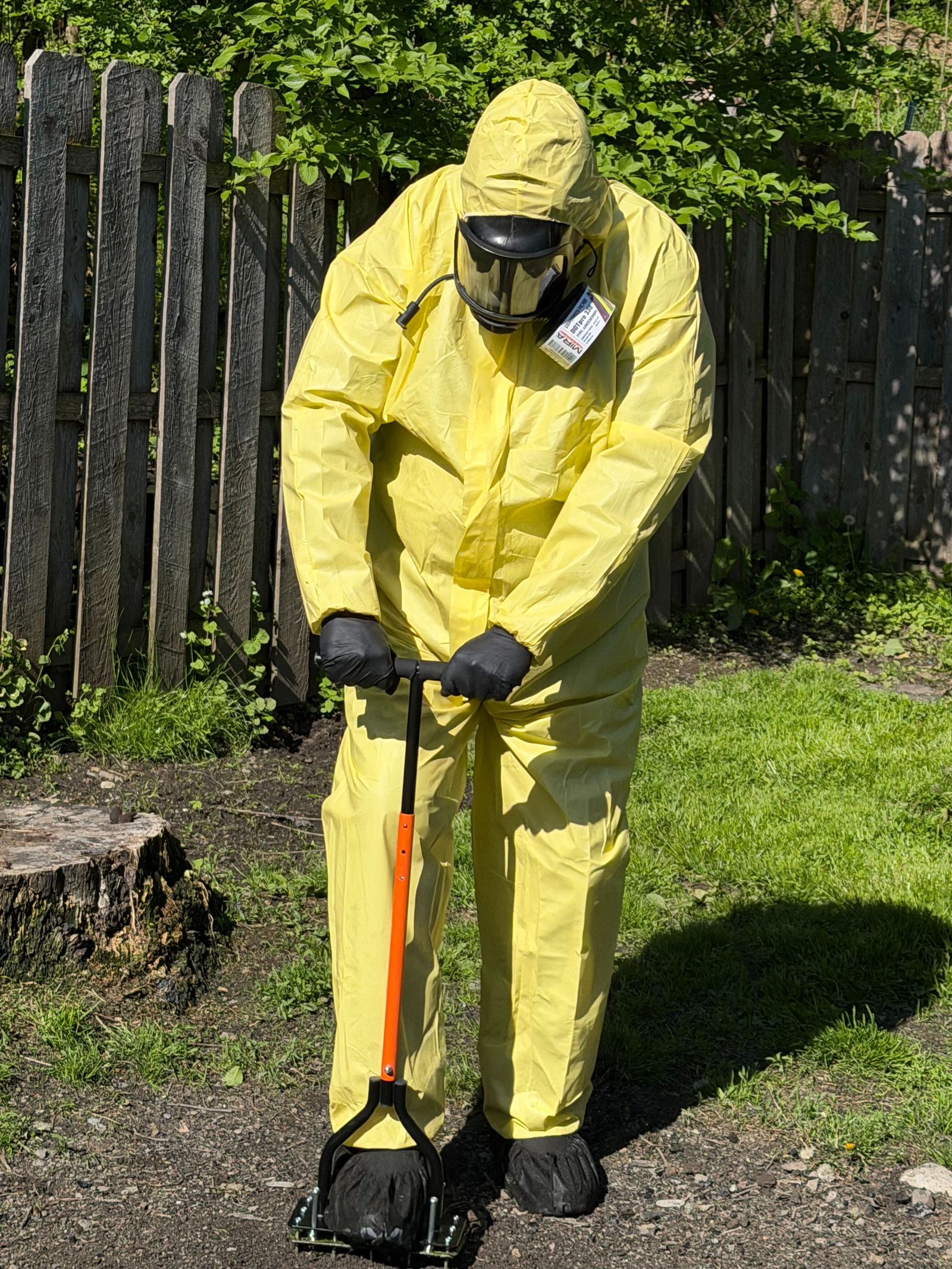
Many PAH-degrading organisms need oxygen, so the soil is aerated before application to give the biology air and a way in.
Samples are taken repeatedly over time and sent to an independent commercial laboratory that runs standard EPA methods for these compounds.
Why there are no numbers yet
Breakdown of the heavier PAHs takes months, and dioxins take longer. A few weeks of data can’t show whether a treatment works, and single grab samples vary a lot from spot to spot. We will report once monitoring has run long enough to mean something, and residents will see the results first.
For the next phase, we recommend:
- untreated control plots beside treated plots, for a fair comparison
- composite samples from several cores per plot, at the same depth and through the same lab, at baseline and at intervals over a year or more
- total contaminant levels measured alongside bioavailability, since biochar lowers bioavailability without changing the total
- soil biology tested alongside the chemistry
The one early observation we can share is about soil health. The property owner told us grass came in where it hadn’t grown before. That speaks to living soil returning and says nothing yet about contaminants.
What we bring
Elm Dirt manufactures in Kansas City, Missouri, and Plant Juice is CDFA Certified Organic. We can produce 18,000 gallons of liquid biologicals and 35,000 pounds of Ancient Soil per week, and that scales for a larger project. We work directly with applicators and can be on site to help plan, apply and sample.
Contact
If you represent a community, an agency or a landowner and want to know more about this pilot, or about restoring soil where you are, start the conversation.
Sources
- National Transportation Safety Board. “Failed Wheel Bearing Caused Norfolk Southern Train Derailment in East Palestine, Ohio.” Press release, June 25, 2024. ntsb.gov
- U.S. EPA. East Palestine, Ohio Train Derailment. epa.gov/east-palestine-oh-train-derailment
- U.S. EPA. East Palestine Operational Updates. epa.gov
- Lard ML, Eichler SE, Gao P, et al. (2025). Soil contamination by environmentally persistent free radicals and dioxins following train derailment in East Palestine, OH. Environmental Science: Processes & Impacts 27(3):729–740. doi:10.1039/d4em00609g
- Chen G, Rosolina S, Padilla-Crespo E, et al. (2024). Natural attenuation potential of vinyl chloride and butyl acrylate released in the East Palestine, Ohio train derailment accident. Environmental Science & Technology 58(40):17743–17755. doi:10.1021/acs.est.4c04198
- Field JA, Sierra-Alvarez R (2008). Microbial degradation of chlorinated dioxins. Chemosphere 71(6):1005–1018. doi:10.1016/j.chemosphere.2007.10.039
- Fabregat-Palau J, Vidal M, Rigol A (2022). Examining sorption of perfluoroalkyl substances (PFAS) in biochars and other carbon-rich materials. Chemosphere 302:134733. doi:10.1016/j.chemosphere.2022.134733
- Danko AS, Luo M, Bagwell CE, Brigmon RL, Freedman DL (2004). Involvement of linear plasmids in aerobic biodegradation of vinyl chloride. Applied and Environmental Microbiology 70(10):6092–6097. doi:10.1128/AEM.70.10.6092-6097.2004
- Danko AS, Saski CA, Tomkins JP, Freedman DL (2006). Involvement of coenzyme M during aerobic biodegradation of vinyl chloride and ethene by Pseudomonas putida strain AJ and Ochrobactrum sp. strain TD. Applied and Environmental Microbiology 72(5):3756–3758. doi:10.1128/AEM.72.5.3756-3758.2006
- Zalesak M, Ruzicka J, Vicha R, Dvorackova M (2021). Examining aerobic degradation of chloroethenes mixture in consortium composed of Comamonas testosteroni RF2 and Mycobacterium aurum L1. Chemosphere 269:128770. doi:10.1016/j.chemosphere.2020.128770
- De Wildeman S, Linthout G, Van Langenhove H, Verstraete W (2004). Complete lab-scale detoxification of groundwater containing 1,2-dichloroethane. Applied Microbiology and Biotechnology 63(5):609–612. doi:10.1007/s00253-003-1363-y
- Maes A, Van Raemdonck H, Smith K, Ossieur W, et al. (2006). Transport and activity of Desulfitobacterium dichloroeliminans strain DCA1 during bioaugmentation of 1,2-DCA-contaminated groundwater. Environmental Science & Technology 40(17):5544–5552. doi:10.1021/es060953i
- Benedek T, et al. (2021). Potential of Variovorax paradoxus isolate BFB1_13 for bioremediation of BTEX contaminated sites. AMB Express 11(1):126. doi:10.1186/s13568-021-01289-3
- Chicca I, et al. (2020). Degradation of BTEX mixture by a new Pseudomonas putida strain: role of the quorum sensing in the modulation of the upper BTEX oxidative pathway. Environmental Science and Pollution Research 27(29):36203–36214. doi:10.1007/s11356-020-09650-y
- Lu Q, et al. (2022). Effects of Comamonas testosteroni on dissipation of polycyclic aromatic hydrocarbons and the response of endogenous bacteria for soil bioremediation. Environmental Science and Pollution Research 29(54):82351–82364. doi:10.1007/s11356-022-21497-z
- Wang Y, Yamazoe A, Suzuki S, Liu CT, et al. (2004). Isolation and characterization of dibenzofuran-degrading Comamonas sp. strains isolated from white clover roots. Current Microbiology 49(4):288–294. doi:10.1007/s00284-004-4348-x
- Wang W, et al. (2021). Genetic mapping of highly versatile and solvent-tolerant Pseudomonas putida B6-2 (ATCC BAA-2545) for mineralization of PAHs and dioxin-like compounds. Environmental Microbiology 23(8):4309–4325. doi:10.1111/1462-2920.15613
- Woiski C, Dobslaw D, Engesser KH (2020). Isolation and characterization of 2-butoxyethanol degrading bacterial strains. Biodegradation 31(3):153–169. doi:10.1007/s10532-020-09900-3
- Mahto JK, et al. (2021). Molecular insights into substrate recognition and catalysis by phthalate dioxygenase from Comamonas testosteroni. Journal of Biological Chemistry 297(6):101416. doi:10.1016/j.jbc.2021.101416
- Vural C, Ettadili H (2024). Biodegradation of phthalic acid and terephthalic acid by Comamonas testosteroni strains. Folia Microbiologica 69(6):1343–1353. doi:10.1007/s12223-024-01176-x
- Ghosh U, Luthy RG, Cornelissen G, et al. (2011). In-situ sorbent amendments: a new direction in contaminated sediment management. Environmental Science & Technology 45(4):1163–1168. doi:10.1021/es102694h
- Moreno Jiménez E, Aceña-Heras S, Frišták V, et al. (2018). The effect of biochar amendments on phenanthrene sorption, desorption and mineralisation in different soils. PeerJ 6:e5074. doi:10.7717/peerj.5074
- Hilber I, Blum F, Leifeld J, et al. (2012). Quantitative determination of PAHs in biochar: a prerequisite to ensure its quality and safe application. Journal of Agricultural and Food Chemistry 60(12):3042–3050. doi:10.1021/jf205278v
Questions about the East Palestine pilot?
We can walk through how the pilot is set up and what is being measured, and results come after the follow-up testing.