
Bacterium · Diesel alkanes, and a surfactant
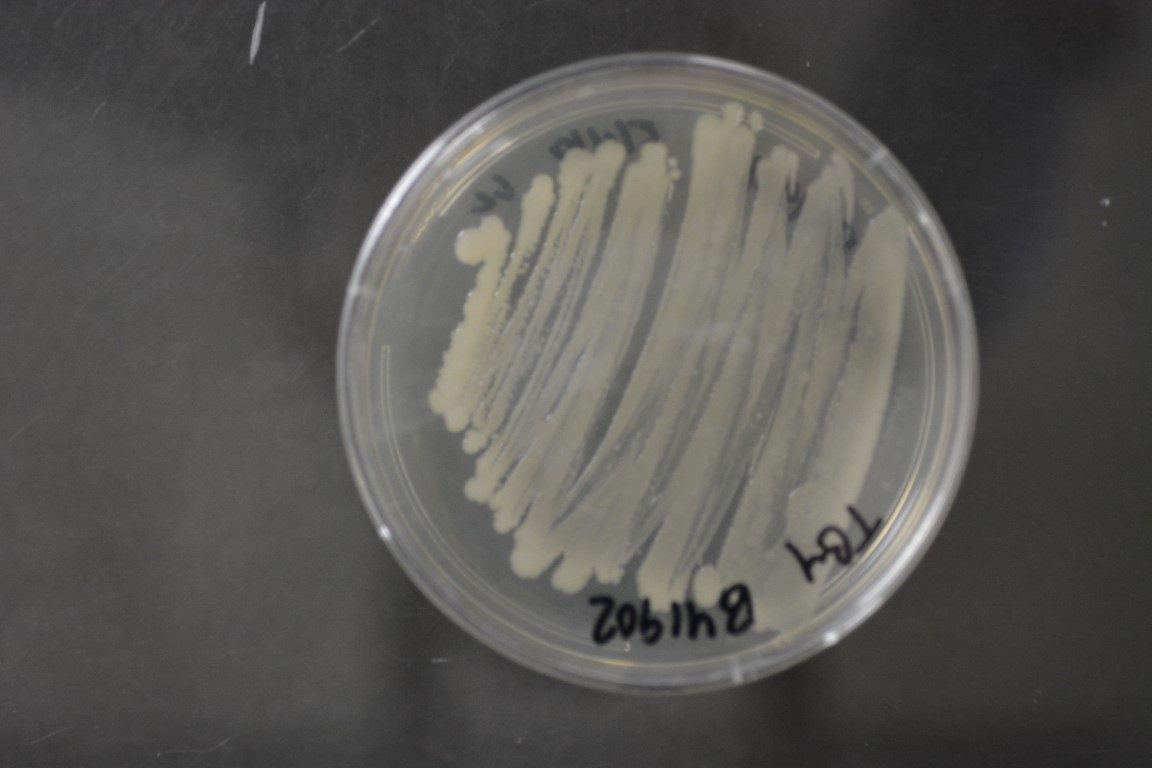
Acinetobacter calcoaceticus
It removed 82 to 92 percent of the mid-range alkanes in diesel over 28 days, and it makes a biosurfactant that pulls contamination off soil particles so other organisms can reach it.
.jpg)
| Contaminant | What the research documents |
|---|---|
| PAHs & SVOCs | Biosurfactant from strain BU03 raised phenanthrene desorption and degradation in bioslurry |
| Petroleum hydrocarbons | alkM-mediated alkane oxidation; 82–92% of C12–C18 alkanes removed in 28 days (strain CA16); alkB, almA, LadA and catABC confirmed genomically |
From published research on the species, not tests of an Elm Dirt product. Studies often work with one strain, and sequencing identifies species, so results on a site are measured on that site.
On this page (5 sections)
What it is
Acinetobacter calcoaceticus is a common soil bacterium that keeps turning up in studies of fuel-contaminated ground, because it eats hydrocarbons.
Peer-reviewed research shows Acinetobacter calcoaceticus can degrade diesel-range alkanes. It is one of the 291 microbial species identified in Plant Juice by independent lab analysis (Biome Makers), and it also appears in the Biome Makers lab profile of Bloom Juice.
What the research shows
On diesel, strain CA16, isolated from Canadian soil, removed 82 to 92 percent of the C12 to C18 aliphatic alkanes in diesel over 28 days. Genome and expression work tied the activity to the alkM alkane-oxidation gene and the xcpR secretion gene [1].
C12 to C18 is the middle of diesel, the fraction biology handles well. Heavier residues, asphaltenes and the aromatic fraction behave differently, and this result doesn’t cover them.
On an aged site the usual limit is access, since the organism can break the compound but can’t reach it, and that is where this species’ biosurfactant comes in. A biosurfactant from strain BU03 raised the desorption rate of phenanthrene in a bioslurry system, most of all at the higher temperature tested [3]. The species also produces rhamnolipids, the best-known class of biosurfactant.
A full genomic analysis of a petroleum-degrading strain found the alkane hydroxylases alkB, almA and LadA alongside the catABC genes for aromatic ring cleavage, so a single organism has enzymes for both chains and rings [4].
The alkane hydroxylase family these enzymes belong to has been characterized across many bacteria, and its genes serve as field markers for whether a soil community can attack fuel at all [2].
How it works
An alkane is a plain, stable chain of carbon and hydrogen. Alkane hydroxylase puts an oxygen atom on the end of the chain and turns it into an alcohol, which the cell oxidizes to a fatty acid and runs through normal metabolism. The carbon ends up as cell material and carbon dioxide. Because the contaminant is food, fuel spills respond to biology far better than metals or PFAS do.
Where it fits
It handles the middle of the fuel range and helps free up what is stuck to soil. The alkane work suits any fuel site, and the surfactant work suits aged PAH ground, where access is the bottleneck. Expect months to a year or more on a site, confirmed by independent lab testing.
Studies
- Ho MT, et al. (2020). Characterization and genomic analysis of a diesel-degrading bacterium, Acinetobacter calcoaceticus CA16, isolated from Canadian soil. BMC Biotechnology 20(1):39. doi:10.1186/s12896-020-00632-z
- Smits TH, et al. (2002). Functional analysis of alkane hydroxylases from gram-negative and gram-positive bacteria. Journal of Bacteriology 184(6):1733–1742. doi:10.1128/JB.184.6.1733-1742.2002
- Zhao Z, Selvam A, Wong JW (2011). Synergistic effect of thermophilic temperature and biosurfactant produced by Acinetobacter calcoaceticus BU03 on the biodegradation of phenanthrene in bioslurry system. Journal of Hazardous Materials 190(1-3):345–350. doi:10.1016/j.jhazmat.2011.03.042
- Zeng Y, et al. (2025). Insights into the genomic architecture and improvement of the capabilities of Acinetobacter calcoaceticus for the biodegradation of petroleum hydrocarbons. Microorganisms 13(8):1953. doi:10.3390/microorganisms13081953
Want to know what's documented for your contaminants?
Tell us what's in the soil, and we'll point you to the organisms and studies that apply, and say where the research is thin.