
Site type
Urban Lead Soils
Old paint, old gasoline and old industry left lead in city soil, in yards, school grounds and community gardens. No microbe destroys that lead, so the practical tools are clean soil, organic matter and good practice to reduce exposure, with testing to tell you where you stand.
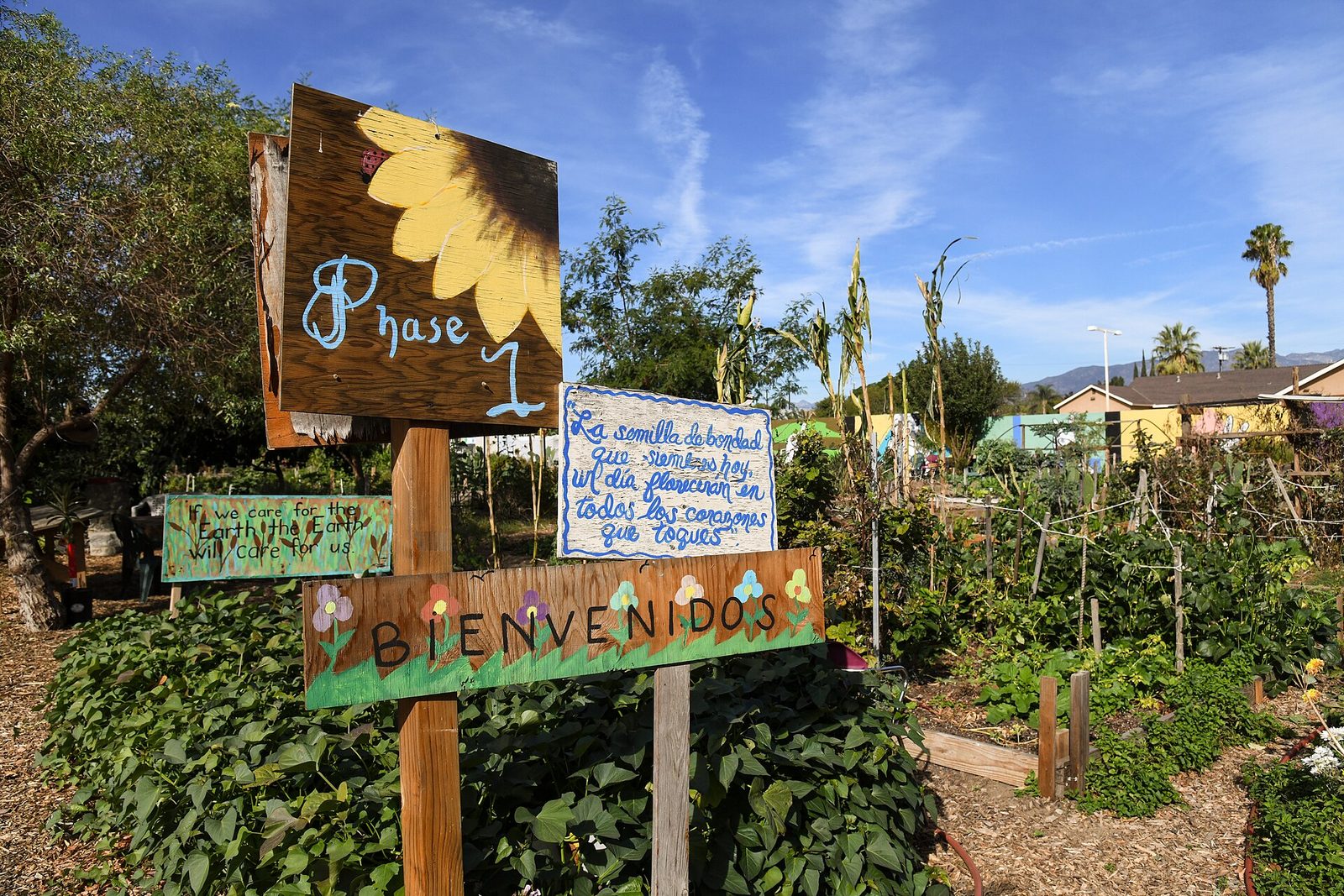
.jpg)
On this page (8 sections)
Lead in city soil is common, and it matters most where children play and people grow food. Biology can do little about lead itself, so this page sticks closely to what the evidence supports.
What is usually in the soil
Lead collects near old houses with lead paint, along busy roads from decades of leaded gasoline, and around former smelters and factories. Arsenic and other metals sometimes come with it. Because lead never breaks down, it stays in the soil until someone removes or covers it.
The current federal benchmark
In January 2024, EPA lowered its recommended screening level for lead in residential soil at Superfund and RCRA cleanup sites from 400 parts per million to 200 ppm, and to 100 ppm where people have other lead exposure, such as from air or water [1]. A screening level is the point where EPA recommends a closer look, and it does not automatically trigger cleanup. More residential properties are expected to be checked under the lower number.
How it is usually handled
For high lead at cleanup sites, the standard remedy is removal and replacement: dig out the contaminated soil, lay a marker barrier, bring in clean soil. Yards and play areas are often capped with clean soil, sod or hardscape.
EPA’s guidance for gardens is practical [2]:
- Build raised beds of clean soil on top of a visible barrier such as garden fabric.
- Work in compost or manure brought in from elsewhere.
- Mulch to hold down dust and keep soil off crops.
- Wash produce and peel root crops.
- Match crops to the lead level; above 400 ppm, EPA advises only shallow-rooted plants in raised beds with at least 16 inches of clean soil, or containers.
Where biology fits
No microbe destroys lead, and we will never tell a school, a gardener or a city that a product takes lead out of their soil.
What organic matter and biology can do is more modest. Organic matter dilutes lead in the root zone and binds metals, so plants take up less. That is why compost appears in EPA’s gardening guidance and in extension advice on contaminated garden soil [2][3]. Some fungi and bacteria bind lead in or on their cells, and pairing them with plants has pulled lead out of soil in controlled studies. That work is promising and slow, and it is no way to clean up a play area.
The clean soil trucked into raised beds and capped areas is often lifeless and needs biology of its own. Building biology into that clean layer gives a capped yard or garden a lasting cover that keeps people off the soil underneath.
Results show up over seasons and are confirmed with soil tests. Where children are exposed to high lead, removal or a clean cover comes first.
Microbes in our products with lead research
Independent DNA sequencing by Biome Makers identified 291 microbial species in Elm Dirt’s Plant Juice. Peer-reviewed research shows a few of them bind lead:
- Mucor circinelloides, a fungus first isolated from mine tailings, binds lead. Paired with a hyperaccumulating plant in lead-contaminated soil, the two removed 58.6 percent of the lead, more than either alone [4].
- Penicillium simplicissimum removes lead and other metals from solution by binding and uptake in living cells [5].
- Saccharomyces cerevisiae, ordinary baker’s yeast, binds lead and other metals on its cell walls [6].
What they do on your ground gets tested there, with an independent lab. More in the microbe library.
Who to involve
City and county health departments, school districts, land-grant extension services and community garden networks. For any garden or play area, a soil lead test comes first.
Talk with us
If you manage school grounds, community gardens or a neighborhood program on lead-affected soil, we can help with the soil-building side of a plan built on testing and clean cover. Contact us.
Sources
- U.S. EPA, Office of Land and Emergency Management (2024). Updated Soil Lead Guidance for CERCLA Sites and RCRA Corrective Action Facilities (fact sheet, January 2024). semspub.epa.gov
- U.S. EPA. Healthy Gardening Practices to Reduce Exposure to Lead-Contaminated Soil. epa.gov
- NC State Extension (2020, revised 2026). Managing the Impact of Floodwater Contaminants on Soil and Produce in Residential, Community, and School Vegetable Gardens. content.ces.ncsu.edu
- Sun L, Cao X, Li M, et al. (2017). Enhanced bioremediation of lead-contaminated soil by Solanum nigrum L. with Mucor circinelloides. Environmental Science and Pollution Research 24(10):9681–9689. doi:10.1007/s11356-017-8637-x
- Chen SH, Cheow YL, Ng SL, Ting ASY (2019). Mechanisms for metal removal established via electron microscopy and spectroscopy: a case study on metal tolerant fungi Penicillium simplicissimum. Journal of Hazardous Materials 362:394–402. doi:10.1016/j.jhazmat.2018.08.077
- Wang J, Chen C (2006). Biosorption of heavy metals by Saccharomyces cerevisiae: a review. Biotechnology Advances 24(5):427–451. doi:10.1016/j.biotechadv.2006.03.001
Managing a site like this?
Tell us where it is and what's been tested, and we'll tell you where biology fits in the plan, if it fits at all.