
Bacterium · Naphthalene degrader, field-monitored
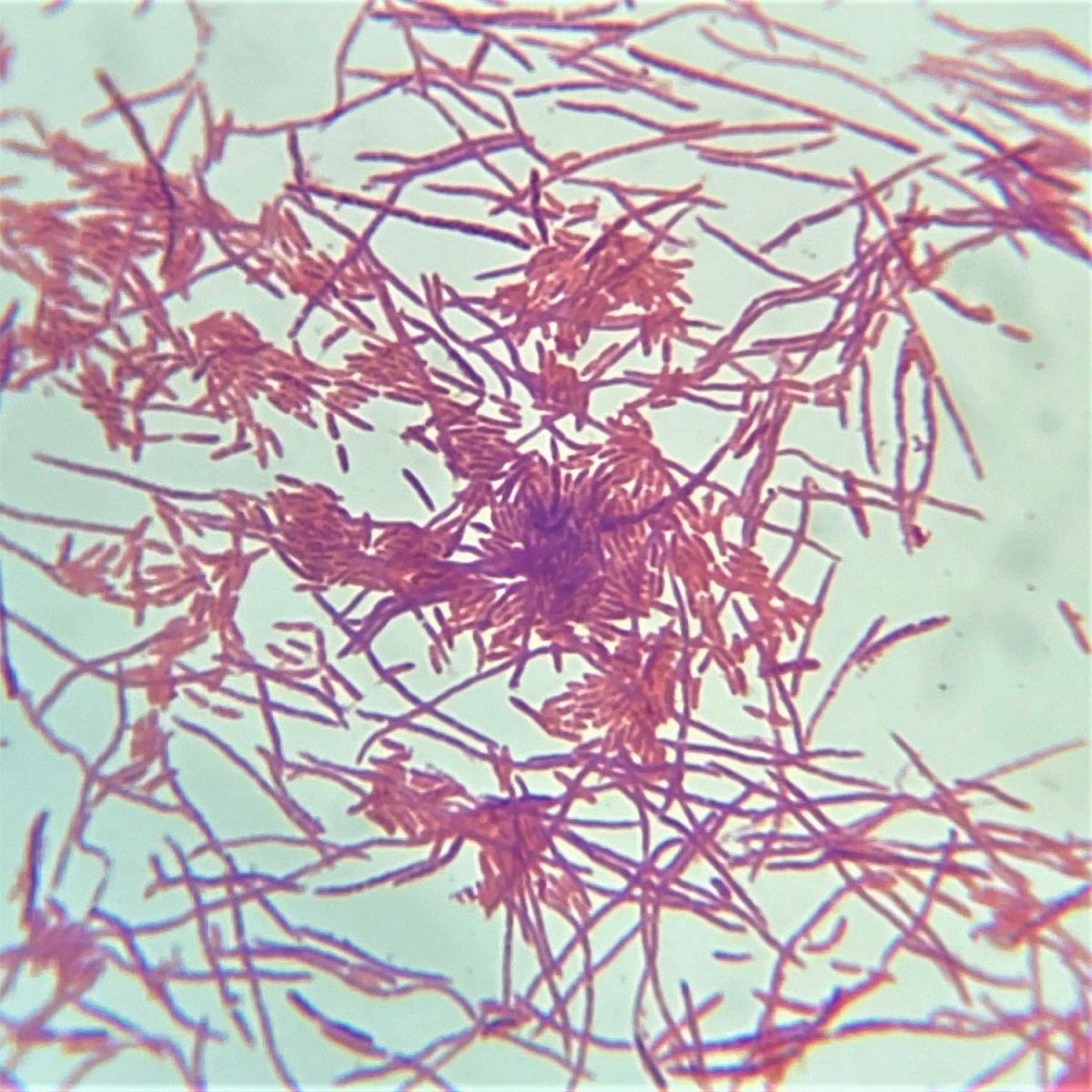
Pseudomonas fluorescens
A root-zone bacterium whose naphthalene-degrading strain became the United States precedent for monitoring an introduced degrader in soil across two years.

| Contaminant | What the research documents |
|---|---|
| PAHs & SVOCs | nah pathway for naphthalene and salicylate; strain HK44 tracked through a 2-year contained field release |
| Petroleum hydrocarbons | Member of the bioaugmentation consortium in a 365-day diesel field study |
From published research on the species, not tests of an Elm Dirt product. Studies often work with one strain, and sequencing identifies species, so results on a site are measured on that site.
On this page (5 sections)
What it is
Pseudomonas fluorescens is one of the most common bacteria in the plant root zone. In remediation it is known for degrading naphthalene, and for strain HK44, which was built to glow while doing it.
Peer-reviewed research shows Pseudomonas fluorescens can degrade naphthalene and contribute to diesel breakdown in field soil. It is one of the 291 microbial species identified in Plant Juice by independent lab analysis (Biome Makers).
What the research shows
Strain HK44 carries the nah genes for naphthalene breakdown fused to a light-producing reporter, so the cells light up when the pathway switches on. It was released into contained field lysimeters and tracked for two years [1]. That study is still the U.S. reference for how an introduced degrader behaves in real soil over time: how long it survives and how its population shifts.
The species was also one of four organisms in the consortium in the 365-day diesel field study [2].
Follow-up work with HK44 found that plant root material enlarged the degrading population enough to speed naphthalene breakdown, even though root compounds suppressed the pathway inside individual cells [3]. That helps explain a repeated finding: PAHs often disappear faster in planted soil than in bare soil, and PAH-degrading bacteria concentrate around the roots of plants growing on contaminated ground [4].
How it works
The nah pathway opens the naphthalene ring in stages and routes the pieces through salicylate into central metabolism. Other species carry versions of the same pathway, which is part of why naphthalene breaks down faster than most PAHs on most sites.
Where it fits
Its best fit is PAH and fuel ground with plants in the plan, since its activity rises around roots; see PAHs and SVOCs. HK44 also set the pattern we follow on every site: watch an introduced organism for as long as it takes, here two years, and let the field data speak.
Studies
- Ripp S, et al. (2000). Bioluminescent most-probable-number monitoring of a genetically engineered bacterium during a long-term contained field release. Applied Microbiology and Biotechnology 53(6):736–741. doi:10.1007/s002530000343
- Szulc A, et al. (2014). The influence of bioaugmentation and biosurfactant addition on bioremediation efficiency of diesel-oil contaminated soil: feasibility during field studies. Journal of Environmental Management 132:121–128. doi:10.1016/j.jenvman.2013.11.006
- Kamath R, Schnoor JL, Alvarez PJ (2004). Effect of root-derived substrates on the expression of nah-lux genes in Pseudomonas fluorescens HK44: implications for PAH biodegradation in the rhizosphere. Environmental Science & Technology 38(6):1740–1745. doi:10.1021/es0306258
- Daane LL, et al. (2001). Isolation and characterization of polycyclic aromatic hydrocarbon-degrading bacteria associated with the rhizosphere of salt marsh plants. Applied and Environmental Microbiology 67(6):2683–2691. doi:10.1128/AEM.67.6.2683-2691.2001
Want to know what's documented for your contaminants?
Tell us what's in the soil, and we'll point you to the organisms and studies that apply, and say where the research is thin.