
Bacterium · Anaerobic metal reducer
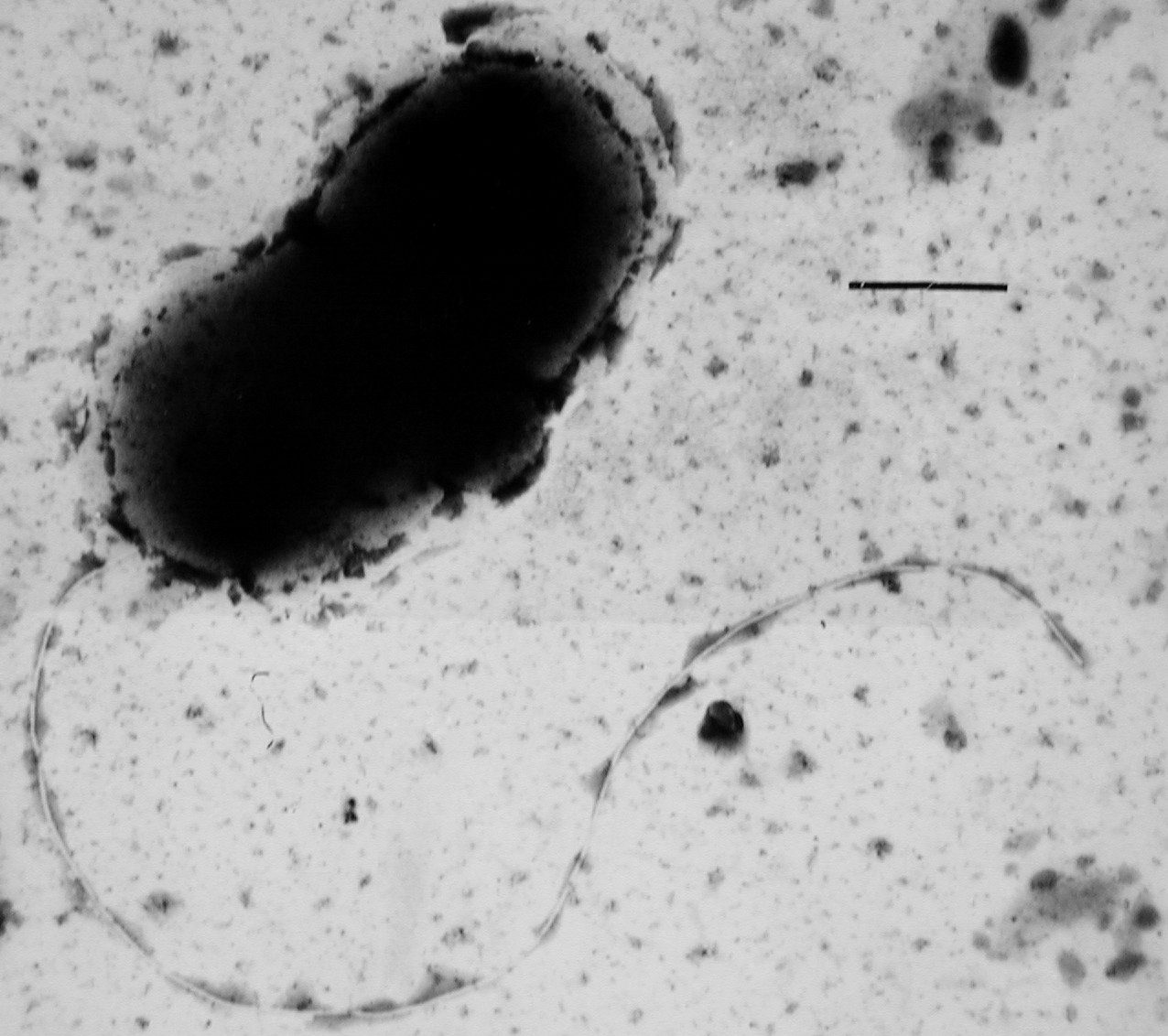
Desulfovibrio vulgaris
In oxygen-free soil and sediment it reduces chromium(VI) and uranium(VI) to far less mobile forms using a small iron-containing protein.

| Contaminant | What the research documents |
|---|---|
| Heavy metals | Cytochrome c₃-mediated reduction of chromium(VI) and uranium(VI); bioprecipitation under anaerobic conditions |
From published research on the species, not tests of an Elm Dirt product. Studies often work with one strain, and sequencing identifies species, so results on a site are measured on that site.
On this page (5 sections)
What it is
Desulfovibrio vulgaris is a sulfate-reducing bacterium that lives without oxygen, in waterlogged soil, sediment and the airless pockets inside soil aggregates.
Peer-reviewed research shows Desulfovibrio vulgaris can reduce chromium(VI) and uranium(VI) to less soluble forms. It is one of the 291 microbial species identified in Plant Juice by independent lab analysis (Biome Makers).
What the research shows
U.S. Geological Survey researchers showed that D. vulgaris reduces chromate and identified cytochrome c₃ as the protein responsible [1].
The same protein reduces uranium(VI) to uranium(IV) [2], which drops out of solution as a solid.
Later work found chromium reduction rates and cell survival depend heavily on temperature and nutrient ratios. At 20 degrees Celsius with limited electron acceptor, reduction slowed sharply and lag times stretched to 200 hours [3], which shows that having the organism present is not enough on its own.
How it works
Chromium(VI) is soluble, mobile and highly toxic, and chromium(III) is far less mobile and less toxic. Uranium follows the same pattern across its two oxidation states. These bacteria pass electrons to the metal and flip it into the form that stays put.
The first of two limits on the mechanism is that it needs anaerobic conditions, which points it at saturated or compacted ground, wetland margins and aggregate interiors, not well-aerated topsoil. The second is that it can reverse: drain or re-aerate the soil and the reduced metals can oxidize back toward the mobile form.
Sulfate reduction adds a second route, because the sulfide these bacteria make reacts with dissolved metals to form highly insoluble metal sulfides, one of the more durable ways to hold a metal in place for as long as the ground stays anaerobic.
Where it fits
This organism fits wet, saturated or deep soil where the oxygen is gone, and there it moves chromium and uranium into forms that stay put, the aim of metal immobilization; see heavy metals. Because the effect can reverse, an independent lab should track it over months to a year or more.
Studies
- Lovley DR, Phillips EJ (1994). Reduction of chromate by Desulfovibrio vulgaris and its c₃ cytochrome. Applied and Environmental Microbiology 60(2):726–728. doi:10.1128/aem.60.2.726-728.1994
- Lovley DR, Widman PK, Woodward JC, Phillips EJ (1993). Reduction of uranium by cytochrome c₃ of Desulfovibrio vulgaris. Applied and Environmental Microbiology 59(11):3572–3576. doi:10.1128/aem.59.11.3572-3576.1993
- Franco LC, et al. (2018). Cr(VI) reduction and physiological toxicity are impacted by resource ratio in Desulfovibrio vulgaris. Applied Microbiology and Biotechnology 102(6):2839–2850. doi:10.1007/s00253-017-8724-4
Want to know what's documented for your contaminants?
Tell us what's in the soil, and we'll point you to the organisms and studies that apply, and say where the research is thin.