
Bacterium · Arsenic oxidizer, chromium reducer
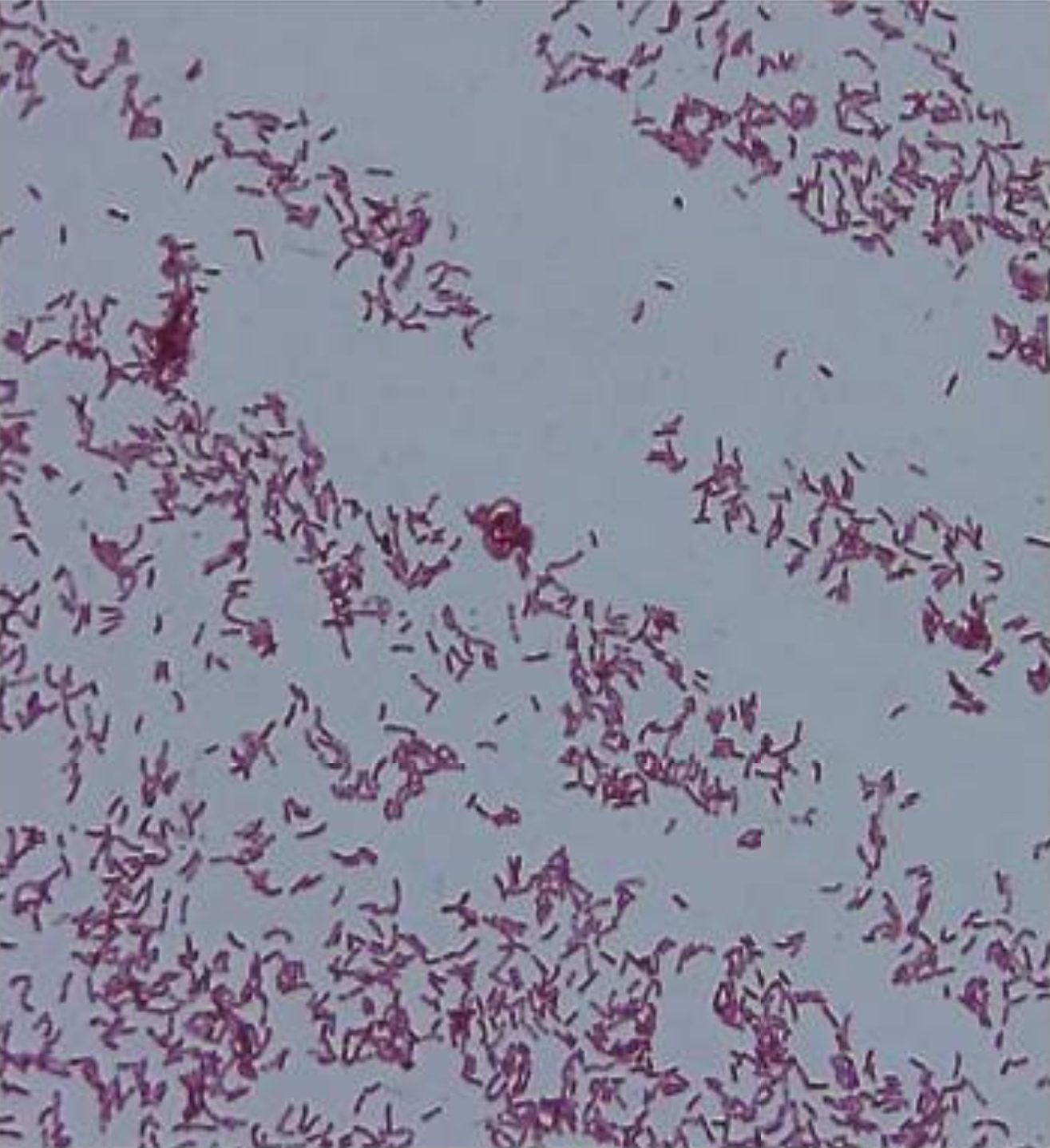
Ensifer adhaerens
One of the few organisms documented to handle two metals at once: oxidizing arsenite while reducing chromium(VI), both toward less mobile forms.

| Contaminant | What the research documents |
|---|---|
| Heavy metals | Simultaneous arsenite oxidation via the aio system and chromium(VI) reduction (strain M8) |
From published research on the species, not tests of an Elm Dirt product. Studies often work with one strain, and sequencing identifies species, so results on a site are measured on that site.
On this page (5 sections)
What it is
Ensifer adhaerens is a soil bacterium in the rhizobium family, better known for fixing nitrogen in plant roots. Some strains also carry genes for handling metals.
Peer-reviewed research shows Ensifer adhaerens can oxidize arsenite and reduce chromium(VI). It is one of the 291 microbial species identified in Plant Juice by independent lab analysis (Biome Makers).
What the research shows
A single strain of this organism acts on two metals: strain M8 oxidized 1 millimolar arsenite and reduced 45.3 percent of 0.1 millimolar chromium(VI) within 16 hours. Genome work placed the full ars and aio gene clusters on a plasmid [1].
Strain ST2 carries a novel enzyme that oxidizes methylarsenite, a form of arsenic that standard pathways miss [2], and the regulator that switches on its whole ars operon has been characterized in the same strain [3].
Most metal-impacted sites carry more than one metal, and a treatment that helps with one can mobilize another, so an organism that acts on two at once is useful.
How it works
The two reactions run in opposite chemical directions and both lower risk.
With arsenic, arsenite, As(III), is more toxic and mobile than arsenate, As(V). As(V) binds far more strongly to the iron and aluminium minerals in soil, so oxidizing arsenite makes the same amount of arsenic much harder to leach into water or draw up through roots. The oxidation changes how readily the arsenic moves, and nothing is destroyed.
With chromium the direction flips, because chromium(VI) is the mobile, toxic form, and reducing it to chromium(III) locks it down.
Neither atom leaves the soil, but both become less available to plants, people and groundwater, which is the realistic goal for metals.
Where it fits
The organism suits orchard ground with an arsenical history, treated-wood sites and mixed industrial soils; see heavy metals. Mobility changes on a site get measured by an independent lab over months to a year or more.
Studies
- Li X, et al. (2023). Physiological, biochemical, and genomic elucidation of the Ensifer adhaerens M8 strain with simultaneous arsenic oxidation and chromium reduction. Journal of Hazardous Materials 441:129862. doi:10.1016/j.jhazmat.2022.129862
- Zhang J, et al. (2022). ArsZ from Ensifer adhaerens ST2 is a novel methylarsenite oxidase. Environmental Microbiology 24(5). doi:10.1111/1462-2920.15983
- Zhang J, et al. (2023). Characterization of a novel ArsR regulates divergent ars operon in Ensifer adhaerens strain ST2. FEMS Microbiology Letters 370. doi:10.1093/femsle/fnad113
Want to know what's documented for your contaminants?
Tell us what's in the soil, and we'll point you to the organisms and studies that apply, and say where the research is thin.