
Fungus · Cell-wall metal binder
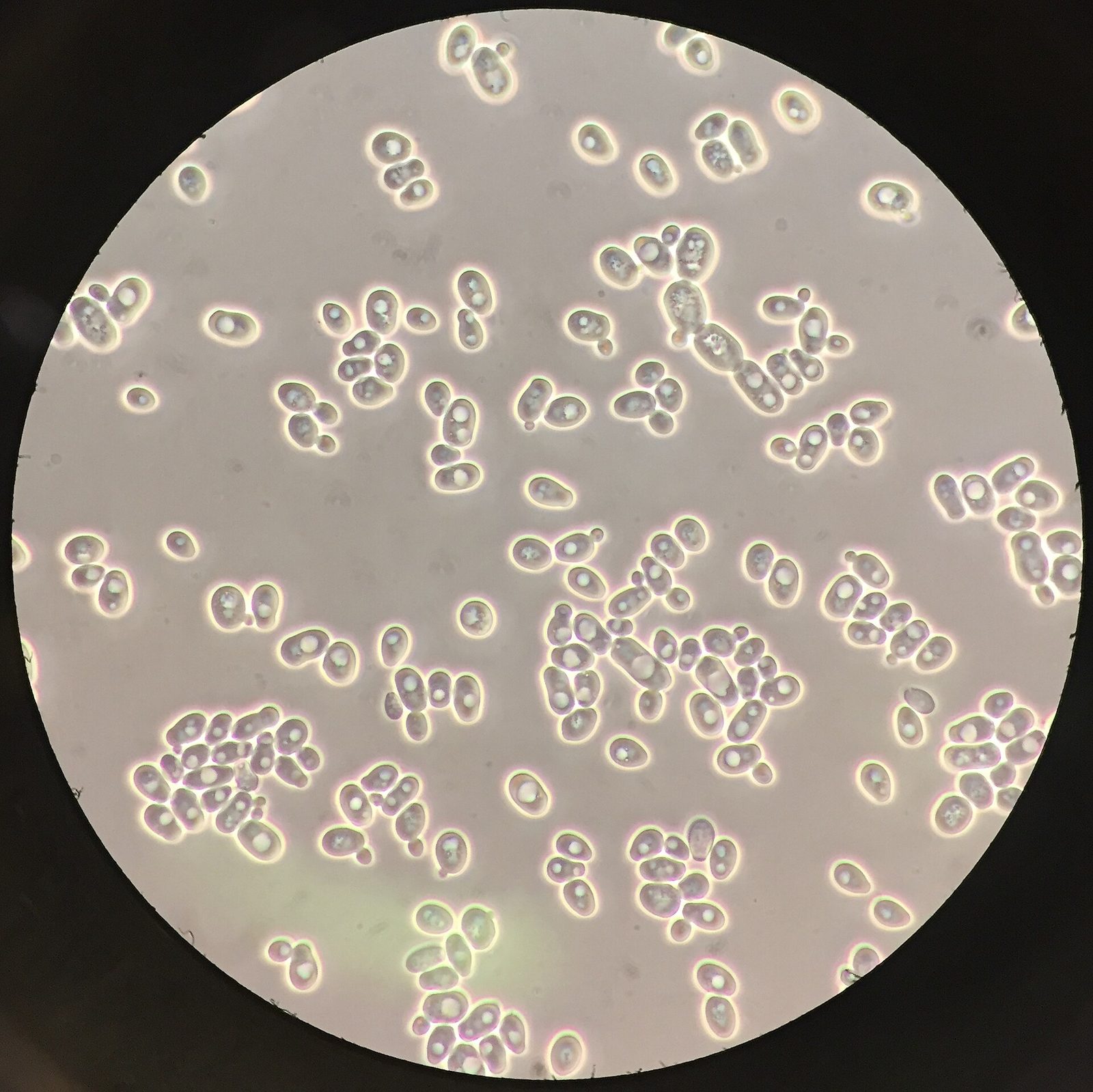
Saccharomyces cerevisiae
Common baker's yeast, and one of the most thoroughly characterized biosorbents in environmental science. It binds metal ions on its cell wall, alive or dead.

| Contaminant | What the research documents |
|---|---|
| Heavy metals | Cell-wall biosorption through carboxyl and phosphoryl groups; cation exchange |
From published research on the species, not tests of an Elm Dirt product. Studies often work with one strain, and sequencing identifies species, so results on a site are measured on that site.
On this page (5 sections)
What it is
Saccharomyces cerevisiae is baker’s and brewer’s yeast. It earns a page here because it has been studied as a metal biosorbent for decades, and because Plant Juice carries a lot of it.
Peer-reviewed research shows Saccharomyces cerevisiae can bind lead, cadmium, zinc and other metal ions on its cell surface. It is one of the 291 microbial species identified in Plant Juice by independent lab analysis (Biome Makers), where it is the second most abundant fungal organism in the profile.
What the research shows
When yeast takes up zinc, it releases potassium, magnesium, sodium and calcium from the cell surface in exchange, which points to cation exchange as the main mechanism [1].
In a screen of microorganisms from treatment-plant wastewater, mixtures including S. cerevisiae removed 99 percent of the copper from solution [2].
Displaying metal-binding protein motifs on the yeast surface sharply increased lead biosorption, more evidence that surface groups do most of the work [3].
How it works
The yeast cell wall is a mesh of polysaccharides and proteins carrying carboxyl, phosphoryl and amine groups. At normal soil pH those groups are negatively charged, and positively charged metal ions bind to them. Dead biomass works as well, since no metabolism is involved. The binding can also let go: a drop in pH can release what was held. Biosorption changes where a metal sits and leaves the metal itself unchanged.
Where it fits
Yeast contributes surface binding of metal ions, a supporting role next to the degraders and redox organisms in this library. In soil it shares that job with clay and organic matter, so metal work gets measured on the site itself; see heavy metals.
Studies
- Chen C, Wang JL (2006). Cation (K⁺, Mg²⁺, Na⁺, Ca²⁺) release in Zn(II) biosorption by Saccharomyces cerevisiae. Huan Jing Ke Xue 27(11):2261–2267. PMID 17326437. pubmed.ncbi.nlm.nih.gov/17326437
- Jakovljević V, et al. (2022). Finding the best combination of autochthonous microorganisms with the most effective biosorption ability for heavy metals removal from wastewater. Frontiers in Microbiology 13:1017372. doi:10.3389/fmicb.2022.1017372
- Kotrba P, Ruml T (2010). Surface display of metal fixation motifs of bacterial P1-type ATPases specifically promotes biosorption of Pb²⁺ by Saccharomyces cerevisiae. Applied and Environmental Microbiology 76(8):2615–2622. doi:10.1128/AEM.01463-09
Want to know what's documented for your contaminants?
Tell us what's in the soil, and we'll point you to the organisms and studies that apply, and say where the research is thin.